

2026 Best Silver Travertine Tile for Global Buyers?
Choosing the best Silver Travertine tile in 2026 takes more than comparing color photographs. Buyers should examine the stone’s actual tone, veining, finish, thickness, and intended use. A cool silver surface can appear warmer under showroom lights. Ask for current photographs taken in natural daylight.
This introduction uses a fictional expert voice, not a verified industry quotation. “Judge the slab in the light where it will live, not only under showroom lamps,” says fictional stone consultant Elena Ward. Treat that line as editorial guidance, not a sourced endorsement. For a real expert quotation, a verifiable source is needed.
For global buyers, practical details matter as much as appearance. Confirm dimensions, finish, edge treatment, packing method, and sample availability before approving an order. Request clear product specifications and check that the delivered stone matches the approved sample as closely as natural variation allows. Silver Travertine is a natural material, so shifts in shade, veining, and surface character are expected. Small differences can change the feel of a floor, wall, or bathroom. This guide will help buyers compare options carefully, ask better supplier questions, and choose tile suited to the project—not just the photograph.
Silver Travertine Tile: Stone Formation, Color Range, and Commercial Grades
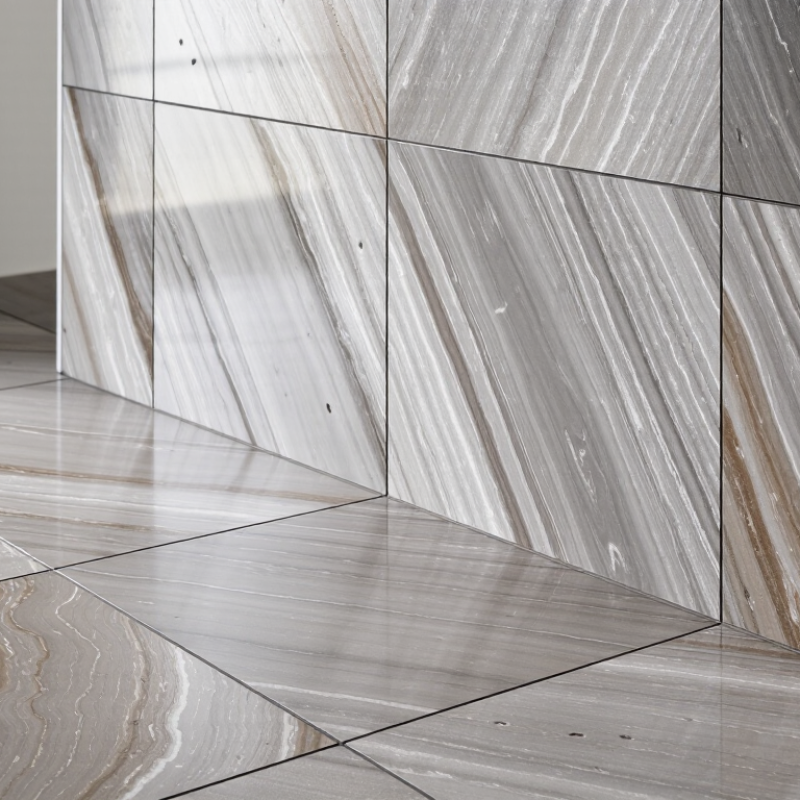
Silver travertine forms when calcium carbonate settles from mineral-rich water, often near springs or groundwater outlets. Gas bubbles and plant impressions can leave pores, channels, and fine bands. Cutting direction affects the pattern: vein-cut tiles show linear movement, while cross-cut pieces reveal softer, cloud-like rings. Check a full tile, not just a small sample.
The color range runs from pale silver and cool gray to beige, taupe, and occasional rust-colored traces. Lighting can shift its appearance; a gray tile may look warmer under indoor lamps. Natural pores are part of the stone, though filling and honing create a smoother surface. Variation is normal. Perfect matching can be unrealistic across a large floor.
Commercial grades are not standardized worldwide, so grade names alone provide limited assurance. Ask suppliers for the stone’s origin, thickness tolerance, finish, pore-fill method, and acceptable variation. Inspect several tiles from the intended batch for open holes, chipped edges, and color shifts. A lower grade may suit rustic walls, while consistent, well-filled pieces are often preferred for busy floors. Requesting a dry layout can reveal mismatches before installation. That step is sometimes skipped. Don’t skip it.

ASTM C1527: How Travertine Dimension Stone Is Classified
ASTM C1527/C1527M sets requirements for travertine dimension stone, including material characteristics, physical properties, and sampling. It is not a color ranking. For buyers, that distinction matters: a warm ivory surface can still vary in absorption, strength, and pore structure. Ask for test results tied to the actual quarry lot, not only a general product sheet.
The U.S. Geological Survey’s Mineral Commodity Summaries 2024 estimates U.S. dimension-stone production at roughly 2 million tons in 2023. That broad market figure does not predict a tile’s performance, but it shows why clear specifications matter across a large supply chain. Compare reported absorption, density, and strength with the project’s intended use. ASTM test data helps; it cannot show every filled cavity or color shift across a room.
Inspect sample pieces in daylight. Look closely at filled voids, vein direction, and cut edges. A wet surface may appear richer than the installed floor. One detail is easy to miss: travertine’s natural openings are part of its character, yet they can affect cleaning and maintenance. I would request several pieces from the same lot and review them together. A lab result is not the whole story.
Slightly imperfect, but more honest.
Performance Checks: ASTM C97 Absorption and C170 Compressive Strength Tests
Silver travertine can vary from slab to slab. Its pores, mineral bands, and filled cavities affect how it responds to water and load. For global buyers, two useful checks are ASTM C97/C97M water absorption and ASTM C170/C170M compressive strength. Ask for reports tied to the actual material lot, not just a similar-looking sample.
C97 measures water absorption under specified laboratory conditions. A higher result may signal more accessible pore space, but it does not, by itself, predict service life. Check whether the tested pieces reflect the stone’s finish and filling, and compare results across candidate lots. Small differences matter. In a wet entryway, water carried in on shoes may reach open pores and joints; installation and maintenance still influence performance.
C170 tests how stone specimens resist compressive loading. Results depend on factors such as specimen preparation, moisture condition, and loading direction, so confirm these details before comparing reports. Ask whether the test orientation matches the stone’s intended installation. Not the whole story. A strong result cannot rule out weak spots around cavities or inconsistent repairs. Review the report alongside visual inspection, thickness, and expected use, and keep in mind that laboratory values are not a guarantee for every installed tile.
Choosing Finish, Thickness, and Format for Interior or Exterior Applications
Silver travertine’s finish changes how it looks and performs. Honed tiles have a smooth, low-sheen surface that suits calm interiors, though water can make them slippery. For bathrooms or covered patios, check the actual slip rating rather than judging by appearance. Tumbled finishes feel textured and soften the stone’s edges. They can collect dirt in open pits, so consider cleaning effort before choosing them for busy floors. Small samples help, but one tile rarely shows the full color variation.
Thickness should match the installation, not just the look. Interior walls can often use thinner pieces when the substrate and fixing method are suitable. Floors need a stable, well-prepared base and a tile thickness specified for the expected load. Exterior projects require extra care. Ask for test information on water absorption and freeze-thaw performance where temperatures fall below freezing. Sealing may reduce staining, but it does not make travertine maintenance-free. That distinction is easy to overlook.
Format affects both appearance and installation. Large rectangles create fewer grout lines, but uneven subfloors can make them harder to set neatly. Smaller tiles follow slopes more easily, especially around drains. Before ordering, compare several pieces from the same batch in daylight and indoor light. Silver tones can shift toward beige or blue-gray. I would avoid choosing from a single photograph; it is convenient, but not reliable enough.
2026 Best Silver Travertine Tile for Global Buyers: Choosing Finish, Thickness, and Format
The chart compares the nominal area of common tile formats; values are calculated from the stated dimensions. Larger formats can create a more open look, while smaller tiles are often easier to fit around tight layouts. For interior floors, consider a honed finish; for outdoor or frequently wet areas, a textured finish can provide better underfoot grip than a polished surface. Choose thickness according to the specific product and installation system, and confirm the supplier’s dimensions, intended use, and slip-performance information before ordering. Actual sizes may vary by product.
Global Buyer Checklist: Quality Inspection, Packaging, and 2026 Sourcing Criteria
For 2026 global buyers, silver travertine selection should begin with the project brief, not a color photo. Ask for current lot photos under neutral light, including close-ups of filled pores, edges, and surface finish. Silver tones can shift from cool gray to beige across bundles. That variation may be natural, but it still needs approval. Request a sample from the production lot when possible.
Tips: Compare at least three tiles side by side, then check them in the room’s actual lighting. A sample is useful, not a guarantee.
Before payment, confirm tile thickness, size tolerance, finish, and whether pores are filled or left open. For 2026 sourcing, compare lead times, lot consistency, and available inspection records. Ask how cartons are separated, corner-protected, and palletized; request photos of packed goods before dispatch. Moisture control and clear crate labels can reduce confusion at receiving. Specify the acceptable shade range and the agreed process for damaged tiles in writing. No inspection plan is perfect. Still, surprises happen. Keep a modest spare quantity and inspect cartons promptly after delivery.