
What Are the 2026 Top Click Flooring Types for Buyers?
Choosing the 2026 top Click Flooring types will require more than comparing colors online. Buyers will examine installation speed, moisture resistance, acoustic comfort, repairability, and total ownership cost. A floor should survive real life: wet entryways, rolling office chairs, pet claws, and dropped kitchen utensils.
Recent industry evidence supports this practical shift. Grand View Research’s 2024 Flooring Market Analysis identifies resilient flooring as a major growth category, supported by renovation demand and easier installation. The Freedonia Group also reports continued gains for hard-surface flooring in the United States, especially where buyers value durability and maintenance savings. These findings point toward four strong contenders: luxury vinyl click, waterproof laminate, rigid-core SPC, and engineered wood click systems. Each type solves a different problem. SPC offers firm dimensional stability. Laminate delivers detailed wood visuals at a controlled price. Engineered wood adds authentic texture and warmth. Luxury vinyl remains versatile in busy, moisture-prone rooms.
Brett Miller, NWFA’s vice president of technical standards and education, has emphasized, “The key to a successful floor installation is moisture control.” That warning matters for every click system, even those marketed as waterproof. Product claims can sound effortless. Subfloors are not always effortless. Grand View’s projections are useful, but they cannot predict every regional preference or installation mistake. This guide therefore treats “top” as a buyer-focused ranking, not a permanent verdict. The best 2026 Click Flooring choice may depend on one overlooked detail: the room beneath your feet.
What Is Click Flooring and How Does Its Locking System Work?
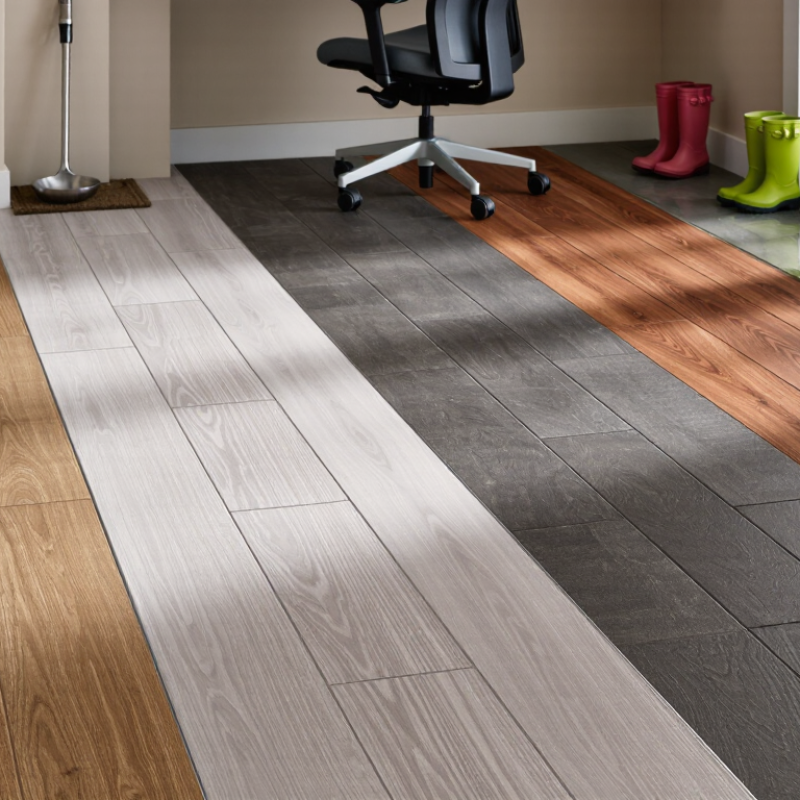
Click flooring uses boards with matching edges that lock together without traditional nails or wet adhesive. One edge carries a tongue, while the opposite edge has a groove or mechanical channel. Angled or pressed movement connects them. The joint should feel tight, but it should not require heavy force. If a mallet is needed repeatedly, the subfloor or alignment may be wrong.
For 2026 buyers, the main click options include SPC, WPC, laminate, and engineered wood. SPC has a rigid mineral core and handles dents well. WPC feels warmer and softer underfoot, though it may cost more. Laminate offers detailed wood visuals and strong surface wear resistance. Engineered wood provides genuine timber on top, but moisture control becomes more important. These differences affect kitchens, bedrooms, hallways, and rental properties differently.
Installation quality controls much of the floor’s performance. The subfloor should be clean, dry, and reasonably level before fitting begins. Small uneven areas can create movement, hollow sounds, or separated joints. Leave an expansion gap around walls, cabinets, and fixed objects. Room temperature matters too. Boards need time to adjust before installation. Many buyers focus on waterproof claims and overlook edge sealing, sunlight, and standing water. That is a mistake. Click systems are convenient, not magical. I would also question any product promising zero maintenance. Regular sweeping, careful furniture pads, and prompt spill removal still matter.
Which Click Flooring Types Are Leading Buyer Choices in 2026?
What Are the 2026 Top Click Flooring Types for Buyers?
Which click flooring types are leading buyer choices in 2026? Luxury vinyl plank remains a strong contender because it combines fast installation, water resistance, and realistic wood textures. Grand View Research projects the global luxury vinyl tile market to grow at about 7.7% annually from 2024 to 2030. That growth reflects practical demand, especially in kitchens, hallways, and rental properties. Click-lock joints also reduce installation time. A homeowner can often replace one damaged plank without removing an entire floor.
Laminate flooring continues to attract budget-conscious buyers. Research and Markets forecasts steady growth in the laminate flooring market through the decade, supported by improved surface printing and scratch resistance. Many current products show convincing oak, walnut, and stone patterns. They also create a warmer feel underfoot than some rigid vinyl floors. However, water protection varies widely. A bathroom claim can fail when the installation ignores seams, subfloor moisture, or edge sealing. The product label is not the whole specification.
Engineered wood click flooring appeals to buyers seeking genuine timber surfaces. Its layered construction can reduce movement compared with solid wood, according to technical guidance from flooring trade associations. Yet it usually demands better subfloor preparation and moisture control. SPC click flooring is another fast-growing choice, particularly where dent resistance matters. It feels firm. That is not always comfortable. Buyers should compare wear layers, locking strength, acoustic underlay, warranty limits, and room conditions before choosing. Industry forecasts are useful, but they cannot replace a moisture reading at the actual project site.
How Do Vinyl, Laminate, Engineered Wood, and SPC Compare?
For 2026 buyers, click flooring choices usually come down to moisture, comfort, and repairability. Vinyl remains practical for kitchens and entryways. Grand View Research projects the global vinyl flooring market to grow at about 7% annually through 2030. It resists spills, feels softer underfoot, and installs quickly. Laminate often delivers sharper wood visuals and strong scratch resistance, but standing water can damage its core. Engineered wood provides genuine timber veneer and a warmer feel. However, its surface may need more care. SPC, a rigid stone-plastic composite, offers excellent dimensional stability and firm click joints. It can feel hard and cold without an underlay.
Tips: Test samples beside windows and under evening lighting. Walk on them with shoes and bare feet. Click two boards together before buying. A loose joint is a warning sign.
Industry reports show why durability matters. The Freedonia Group identifies resilient flooring as a continuing growth area in U.S. construction and remodeling demand. Meanwhile, flooring life-cycle studies warn that performance depends heavily on subfloor preparation and installation quality. This is where buyers sometimes misjudge SPC and laminate. Neither can hide a badly uneven floor forever. Vinyl can dent under heavy furniture, while engineered wood can show scratches sooner than expected. My practical view is imperfect: the “best” click floor changes by room, household habits, and maintenance discipline. A sample may look convincing. Real use is less forgiving.
What Are the 2026 Top Click Flooring Types for Buyers? – How Do Vinyl, Laminate, Engineered Wood, and SPC Compare?
| Comparison Factor | Click Vinyl | Click Laminate | Click Engineered Wood | SPC Flooring |
|---|---|---|---|---|
| Typical construction | Multi-layer PVC-based flooring with a printed décor layer and protective wear layer. | High-density fiberboard core with a decorative image layer and resin-based wear surface. | Real hardwood veneer bonded to a plywood or high-density wood-fiber core. | Rigid stone-polymer composite core with a décor layer and protective surface. |
| Common total thickness | Approximately 2–8 mm, excluding underlayment. | Approximately 7–12 mm, including the attached or separate underlayment where applicable. | Approximately 12–20 mm. | Approximately 3.5–8 mm, excluding optional underlayment. |
| Water resistance | Very good; suitable for kitchens, bathrooms, and utility areas when seams and edges are properly installed. | Moderate to very good depending on the product; standing water can still damage joints or the wood-fiber core. | Limited to moderate; moisture control and prompt spill removal are important. | Excellent surface and core resistance; installation details still matter in wet areas. |
| Resistance to dents and impact | Good, with softer products more likely to show dents from heavy furniture. | Good surface scratch resistance; edges may chip if heavily impacted. | Good, but the real wood veneer can dent or scratch and may show natural variation. | Very good dimensional stability and impact resistance, although the surface can still scratch. |
| Comfort underfoot | Resilient and relatively quiet, especially with a quality backing or underlayment. | Firm and moderately comfortable; underlayment improves sound and feel. | Warm, natural, and comfortable with a more authentic wood feel. | Firm and stable; an attached pad can improve acoustics and comfort. |
| Installation difficulty | Low to moderate; floating click installation is common and planks are easy to cut. | Low to moderate; requires a clean, level subfloor and careful joint alignment. | Moderate; subfloor preparation, expansion gaps, and acclimation requirements are more important. | Low to moderate; rigid planks install quickly but need accurate cutting and a flat base. |
| Subfloor tolerance | Handles minor imperfections better than wood-based products, but major unevenness must be corrected. | Requires a firm, dry, and relatively level subfloor to prevent joint movement. | Requires the most careful preparation because movement and moisture can affect the wood core. | Rigid core hides small surface irregularities but cannot compensate for significant subfloor unevenness. |
| Cleaning and maintenance | Simple sweeping, vacuuming, and damp mopping with a suitable cleaner. | Easy routine cleaning; avoid excessive water and abrasive tools. | Requires prompt spill removal, furniture protection, and periodic care for the wood surface. | Very easy routine maintenance with sweeping, vacuuming, and limited damp mopping. |
| Underfloor heating compatibility | Often compatible with electric or hydronic systems within the stated temperature limits. | Often compatible when the flooring and underlayment are approved for heated floors. | Often compatible, but temperature control and installation instructions are essential. | Generally suitable within manufacturer-specified temperature limits. |
| Typical residential service life | Approximately 10–25 years, depending on wear layer, traffic, and maintenance. | Approximately 10–25 years under normal residential use. | Approximately 20–50 years when properly maintained; some products can be refinished. | Approximately 15–30 years, depending on wear layer, traffic, and installation quality. |
| Typical material cost range | About US$1.50–$6.00 per sq. ft., excluding installation. | About US$1.50–$5.00 per sq. ft., excluding installation. | About US$3.00–$12.00 or more per sq. ft., excluding installation. | About US$2.00–$7.00 per sq. ft., excluding installation. |
| Best suited to | Budget-conscious buyers seeking flexible, water-resistant flooring for busy areas. | Buyers wanting a wood-look floor with good scratch resistance and straightforward installation. | Buyers prioritizing authentic wood appearance, long-term value, and potential refinishing. | Buyers needing a highly stable, water-resistant floor for high-traffic or moisture-prone spaces. |
Note: Cost, service life, water resistance, and installation requirements are typical residential ranges and vary by product construction, region, subfloor condition, installation quality, and warranty specifications.
What Features Should Buyers Evaluate Before Choosing Click Flooring?
In 2026, buyers are comparing more than color and price. Click flooring may include SPC, WPC, laminate, and engineered wood constructions. The right choice depends on room conditions, not only the product photograph. Start with the core. SPC resists dents and temperature changes, while WPC feels warmer and softer underfoot. Laminate can provide sharp visual detail, but moisture control becomes more important. Engineered wood offers genuine timber wear, yet surface care requires greater discipline. These differences matter beside kitchens, sunny windows, and busy entrances.
Look closely. Joints should close evenly without lifted edges, visible gaps, or brittle snapping. During site checks, I press across several seams and walk the area in hard shoes. Movement, clicking sounds, or open joints may reveal an uneven subfloor. Never skip it. Check board thickness, wear-layer depth, scratch resistance, and edge protection. High-traffic homes need stronger surface protection than quiet guest rooms. Underlayment compatibility also affects sound, comfort, and joint stability. Some systems require a specific underlayment, despite appealing claims of universal use.
Moisture performance needs careful reading. Water-resistant does not always mean waterproof, especially at unsealed edges. Ask for test standards, installation limits, and cleaning instructions in writing. Review indoor air information, formaldehyde testing, and actual warranty exclusions. Reliable documentation matters more than a confident sales explanation. Measure sunlight, furniture loads, and expansion space before ordering. I once chose a visually perfect floor for a bright room and underestimated fading risk. That mistake was avoidable. Sample boards should stay in the room for several days, including near windows and heating vents.
What Are the 2026 Top Click Flooring Types for Buyers?
Typical total thickness ranges for major click-flooring categories commonly compared by residential buyers.
Typical residential specification ranges; exact values vary by product construction and installation system.
Features Buyers Should Evaluate Before Choosing Click Flooring
- Water performance: Check whether the product is water-resistant or waterproof, including the locking joints and edge treatment.
- Wear protection: Compare the laminate wear class or the vinyl wear-layer thickness for the expected traffic level.
- Core construction: SPC offers a rigid mineral core, WPC provides a more resilient feel, while laminate and engineered wood offer different appearances and maintenance requirements.
- Installation requirements: Confirm click-system compatibility, expansion gaps, subfloor flatness limits, and whether an attached underlayment is included.
- Indoor environment: Review low-emission certifications, formaldehyde compliance, slip resistance, warranty terms, and cleaning instructions.
How Can Buyers Match Click Flooring to Each Room and Budget?
Choosing click flooring starts with the room, not the trend. According to Grand View Research, the global luxury vinyl tile market is projected to grow strongly through 2030. SPC and WPC remain popular because their locking systems simplify installation and reduce labor costs. SPC feels firmer underfoot. WPC feels warmer and quieter.
For kitchens, entryways, and bathrooms, SPC or waterproof laminate offers practical protection against splashes and muddy shoes. Check the product’s water-resistance claim carefully. “Waterproof” does not excuse standing water or poor subfloor preparation. The U.S. Environmental Protection Agency stresses moisture control before flooring installation. That advice is easy to ignore.
Bedrooms and living rooms can use laminate, WPC, or engineered wood. Laminate usually suits a tighter budget, while engineered wood provides a more authentic timber surface. According to the European Producers of Laminate Flooring, modern laminate commonly uses abrasion classifications for residential and commercial wear. Higher ratings can help busy households, but they may raise costs. Measure waste, underlayment, trims, and delivery before comparing prices. A cheap box can become expensive.
For uneven floors, rigid SPC may hide minor imperfections, but it cannot repair serious dips. I have seen attractive floors fail because installers rushed this step. Click systems save time, not judgment. Choosing flooring remains a balance between moisture, comfort, traffic, appearance, and budget. No option wins everywhere.
Related Posts
-
The Ultimate Guide to Sourcing Top Quality Suppliers for the Best Lvt Tile Flooring Worldwide
-
Future Market Insights for Best Floor Planks in 2025 with Essential Tips for Global Buyers
-
Elevate Your Space with Premium Vinyl Plank Flooring Manufactured in China
-
7 Reasons Why Best Terracotta Floor Tiles Transform Your Home
-
2026 Best LVT Wood Flooring Options for Your Home Design?
-
Top 10 Best Vinyl Tiles for Stylish Home Flooring?