

What Is the Best Bubble Pendant Lamp for 2026?
Choosing the best Bubble Pendant Lamp for 2026 is less about following a trend and more about matching light, scale, and daily use. A cluster of glass globes can soften a dining area, while a single pendant may suit a small entryway better. The right choice depends on ceiling height, room size, and how much light you actually need. Looks matter, but they are not the whole story.
This guide compares practical details shoppers can check: globe size, frame finish, bulb compatibility, dimming support, and cleaning requirements. It also considers whether a fixture casts useful light over a table or mostly creates atmosphere. Check the product’s dimensions against your room, and confirm installation needs before buying. A beautiful fixture can feel oversized once it hangs above a narrow table. That happens.
Product listings do not always show how bright a lamp feels in a real room, so treat staged photos as a starting point, not proof. Compare specifications from the manufacturer, review warranty terms, and look for clear information about materials and included components. I would not call one design universally best; personal taste and room conditions can change the answer. Slightly inconvenient, perhaps, but honest. By weighing those factors together, readers can find a Bubble Pendant Lamp that looks considered, provides suitable light, and fits the space without costly guesswork.
What Defines a Bubble Pendant Lamp?
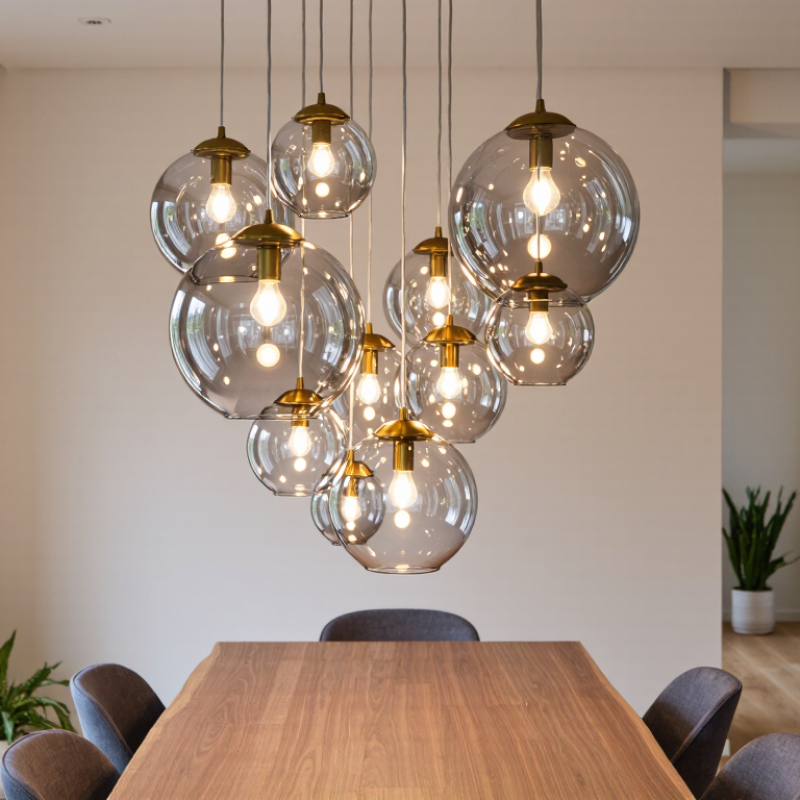
A bubble pendant lamp is defined by its rounded glass shades, arranged as one globe or a cluster of spheres. Those shapes create the “bubble” effect; the fixture may use clear, frosted, or lightly tinted glass. Clear globes reveal the bulb and produce sharper highlights, while frosted glass softens the light. A bubble pendant is not automatically gentle on the eyes. The bulb, glass finish, and hanging height all affect glare.
Look closely at the details. A cluster over a dining table can feel airy, but crowded globes may block sightlines or collect dust around their fittings. I find this easy to overlook in product photos: scale can look very different in a real room. Check the fixture’s dimensions, ceiling height, and bulb compatibility before choosing. The U.S. Department of Energy’s Energy Saver guidance says LEDs use at least 75% less energy and can last up to 25 times longer than incandescent bulbs. That matters. Still, follow the pendant’s specified bulb limits, and remember that a dimmer only works when both the bulb and fixture support it.

How Bubble Pendant Lamps Are Designed and Made
A bubble pendant lamp is built around a simple idea: several rounded forms create a soft, layered glow. Designers first decide the cluster’s scale, spacing, and suspension height. A paper mock-up can reveal awkward gaps before production begins. In glass versions, makers shape or mold each globe, then inspect it for clarity, thickness, and surface defects. Small differences matter. Not every bubble aligns perfectly, and a handmade finish may show slight variation.
The globes are joined to a frame or canopy, with wiring routed through the support. Heat, weight, and access for bulb replacement all influence the design. A crowded cluster may look dramatic, but it can be difficult to clean. The light source matters too. The U.S. Department of Energy’s Energy Saver guidance says LEDs use at least 75% less energy and last up to 25 times longer than incandescent bulbs. That makes efficient, replaceable LED lighting a practical consideration, not just a specification.
Before choosing a pendant, check its dimensions, material, and installation requirements. Look for stable joints and clear instructions for cleaning and replacing bulbs. Ask how the globes are made. “Hand-finished” can mean different things. A little unevenness may add character, but it should not hide poor fit or loose connections. A beautiful fixture still has to work overhead, every day.
What Is the Best Bubble Pendant Lamp for 2026? — How Bubble Pendant Lamps Are Designed and Made
A practical, brand-neutral guide to choosing a bubble pendant lamp and understanding its design and manufacturing. Specifications below are selection benchmarks; exact performance depends on the lamp, bulb, and installation.
| Selection or design dimension | Useful benchmark or process detail | Why it matters |
|---|---|---|
| Overall design | A cluster or arrangement of rounded glass globes, often with clear, opal, or tinted finishes. | Choose a shape and finish that suit the room. Clear glass shows the light source; opal glass diffuses it more evenly. |
| Glass construction | Globes may be machine-made or hand-blown. Some designs use multiple layers of glass or a reflective coating. | Manufacturing method affects consistency, surface details, weight, and price. Check that globes are replaceable if they are individually fitted. |
| Light output | Compare output in lumens rather than watts. For a single LED bulb, roughly 400–800 lumens is a common range, but fixture and room needs vary. | A decorative pendant may provide ambient or accent light rather than enough light for an entire room. Check whether bulbs are included and whether the fixture accepts replaceable bulbs. |
| Light colour and rendering | Warm-white LEDs are commonly around 2700–3000 K. A CRI of 90 or higher is a useful target when accurate colour appearance is important. | Colour temperature affects the mood of the room; CRI describes how naturally colours appear under the light. |
| Dimming | Confirm that the fixture, LED bulbs or built-in driver, and wall dimmer are all compatible. | Compatibility helps prevent flicker, buzzing, limited dimming range, or failure to dim. |
| Scale and placement | Measure the full fixture width and the ceiling-to-bottom drop. For a dining table, a common starting point is about 76–91 cm (30–36 in) above the tabletop. | Room layout, ceiling height, sightlines, and local installation conditions may call for a different height. Confirm that the canopy and suspension length suit the site. |
| Typical manufacturing sequence | Design and prototyping → glass forming → annealing and finishing → metal-part fabrication → electrical assembly → inspection and packing. | Annealing gradually cools formed glass to reduce internal stress. Inspection can include checks for visible defects, assembly, and electrical function. |
| Materials and maintenance | Common components include glass globes, metal frames or sockets, wiring, and a ceiling canopy. Clean glass with a soft cloth and follow the maker’s care instructions. | Check the weight, cleaning access, replacement-globe availability, and whether the finish is suitable for the room’s humidity and use. |
| Electrical safety | Verify that the fixture is rated for the installation location and carries applicable safety certification or conformity documentation for the country of use. | Electrical requirements and accepted certification vary by region. Have hardwired fixtures installed by a qualified electrician when required. |
| Best all-round choice for 2026 | A well-sized fixture with securely mounted globes, a suitable light output, compatible dimming, clear installation instructions, and region-appropriate safety documentation. | There is no single best bubble pendant for every room. Prioritise fit, light quality, safe installation, serviceability, and the look you want. |
Which Features Matter When Choosing One in 2026?
A bubble pendant lamp can become the room’s focal point, but appearance is only part of the decision. In 2026, check the fixture’s diameter against your table or room before buying. A cluster of glass globes may look airy online, yet feel crowded above a small dining table. Measure the space, then mark the lamp’s outline with tape. It is a simple test.
Light quality matters just as much. Check whether the lamp includes bulbs, what bulb type it accepts, and whether its light can be dimmed. Clear glass exposes the bulb, so a harsh, cool-white glow can feel uncomfortable at night. A warm, dimmable option usually gives more flexibility. Small detail. Look closely at the sockets and glass care instructions; fingerprints and dust show quickly on clear surfaces.
Consider the hanging height and how the lamp will be installed. Above a dining table, leave enough clearance for people to see across it without ducking. Confirm the ceiling support can handle the fixture’s weight, especially with several glass globes. Also check the cord or rod adjustment range before ordering. I would not choose a lamp by globe count alone; more bubbles can mean more cleaning and a busier look. Sometimes the simpler fixture works better.
How to Compare Bubble Pendant Lamps for Different Spaces
For 2026, the best bubble pendant lamp depends less on trend and more on the room beneath it. Over a dining table, compare the fixture’s diameter with the tabletop: a common starting point is about one-half to two-thirds of the table’s width. It is a guide, not a rule. Hang the lowest bubbles roughly 30 to 36 inches above the surface, then check sightlines from seated positions. Too low, and the fixture interrupts conversation. Too high, and its shape can lose definition.
In a compact kitchen, a slim, open cluster may feel lighter than a wide globe arrangement. Check whether the bulbs are visible from the counter; exposed light can cause glare during food preparation. In a living room, consider the pendant alongside lamps, since bubbles alone may cast uneven light on reading areas. For an entryway, measure clearance carefully, especially near doors or tall visitors. Small detail. Also inspect the canopy size and ceiling support before choosing a heavy glass design. Dust can collect around the joints, and cleaning several spheres takes longer than product photos suggest. I would compare actual dimensions and bulb compatibility, not just room images; those images can make almost any fixture look perfectly scaled.
How to Install and Maintain a Bubble Pendant Lamp
A bubble pendant lamp looks light, but its glass shades can be surprisingly delicate. Before installation, unpack every piece on a soft towel and check the ceiling support. The electrical box must be rated for the fixture’s weight. Turn off power at the breaker, then confirm the wires are not live with a voltage tester. If the wiring is unfamiliar or the ceiling support seems loose, ask a qualified electrician. A rushed connection is not worth the risk.
Follow the fixture instructions to assemble the frame and attach each shade. Keep glass away from hard floors and metal tools. Lift the lamp with help if it is awkward to hold; don’t let its weight hang from the wires. Connect wires exactly as instructed, secure the canopy, and adjust the hanging height before restoring power. I still find height easy to misjudge. A quick look from the doorway can help.
For routine care, switch off the lamp and let the bulbs cool. Dust the bubbles with a clean microfiber cloth, using a soft brush around narrow fittings. For fingerprints, lightly dampen the cloth rather than spraying cleaner onto the fixture. Dry each shade to prevent streaks. Check screws and visible connections occasionally, especially after cleaning, but never tighten electrical parts while the power is on. If a shade chips, stop handling it and consult the fixture’s instructions for a safe replacement.
Bubble Pendant Lamp Installation and Care Guide
Common guidance places a pendant’s bottom 30–36 inches above a dining table or kitchen island; 33 inches is the midpoint shown here. In a foyer, aim for at least 84 inches of floor clearance. Check the fixture instructions and local requirements before installation. To maintain a bubble pendant, switch off the power and let the bulbs cool before gently dusting the glass with a soft cloth.