
What Is the Best Hiking Raincoat Manufacturer in China?
Choosing the best Hiking Raincoat manufacturer in China requires more than comparing prices or polished factory photographs. A dependable supplier should understand mountain weather, fabric performance, and practical garment construction. Its raincoats should protect hikers during steady rain, sharp wind, and sudden temperature changes. Small details matter. Seam tape must stay flat. Zippers should open with wet gloves. Hoods need enough adjustment for helmets and cold air.
This article examines manufacturers through an evidence-based lens. It considers waterproof ratings, breathability, fabric weight, stitching quality, and production consistency. Factory experience also matters. A capable manufacturer can provide clear samples, accurate size charts, fabric test reports, and realistic delivery schedules. Certifications may support credibility, but they should not replace independent verification. Factory audits, customer references, and traceable material records offer stronger reassurance.
There is no universal winner.
The “best” choice depends on your market, budget, climate, and order volume. A lightweight shell for humid trails may need different materials from a winter expedition coat. Some suppliers communicate well but struggle with complex designs. Others offer excellent technical fabrics but require high minimum quantities. Online claims can be incomplete, and even a successful sample may hide production weaknesses. Careful buyers should test finished garments in real rain, inspect taped seams, and review repeated-order performance. This guide compares the practical signals that separate a reliable Chinese Hiking Raincoat manufacturer from a merely attractive supplier.
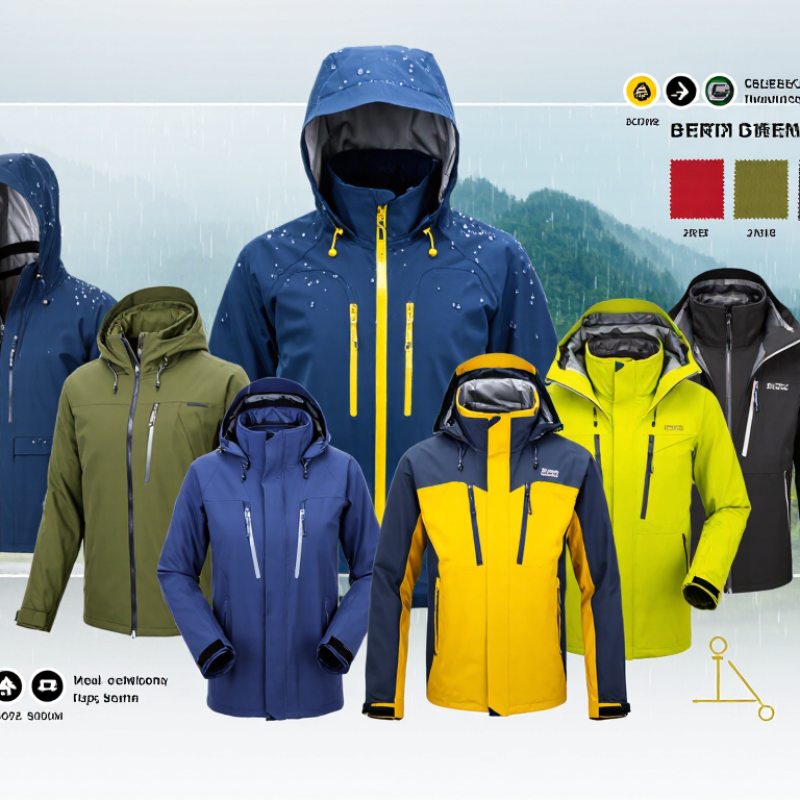
How Hiking Raincoats Are Rated: 10,000–20,000 mm Hydrostatic Head
When choosing the best hiking raincoat manufacturer in China, hydrostatic head is a useful technical starting point. It measures how much water pressure fabric can resist before moisture penetrates. A 10,000 mm rating withstands pressure equal to a 10-meter water column. A 20,000 mm rating resists roughly twice that pressure.
In practical hiking, 10,000 mm usually suits light rain, forest trails, and short day trips. Heavy rain, kneeling on wet ground, or carrying a loaded backpack demands more. A 20,000 mm fabric offers stronger protection, but the number alone can mislead. Testing happens under controlled conditions, not on a windy mountain ridge. It does not prove unlimited waterproof performance.
I have inspected raincoats where the fabric passed laboratory testing, but the seams leaked near the shoulders. Small details matter. A reliable manufacturer should provide hydrostatic head test records and explain the testing method. Ask about seam tape width, zipper construction, hood adjustment, and fabric washing durability. The coating should remain effective after repeated movement and careful cleaning.
A strong factory also checks finished garments, not only fabric rolls. I prefer suppliers with traceable inspections, consistent sizing, and documented quality procedures. Still, I would not choose the highest rating automatically. A heavier 20,000 mm shell may feel less breathable during steep climbs. The better decision balances waterproof pressure, breathability, weight, workmanship, and intended terrain. My own mistake was trusting a specification sheet without testing the finished coat in sustained rain.
What Is the Best Hiking Raincoat Manufacturer in China? — How Hiking Raincoats Are Rated: 10,000–20,000 mm Hydrostatic Head
| Evaluation Dimension | 10,000 mm Level | 15,000 mm Level | 20,000 mm Level | How to Assess It |
|---|---|---|---|---|
| Hydrostatic Head | 10,000 mm water column; suitable for steady rain and general hiking. | 15,000 mm water column; provides a higher margin for prolonged or heavier rain. | 20,000 mm water column; appropriate for demanding wet-weather use when construction is also well sealed. | Check the test method, fabric condition, and whether the result refers to the fabric or the finished garment. |
| Waterproof Test Method | Should be tested using a recognized hydrostatic-pressure method. | Results should be supported by laboratory test records and sample identification. | Repeat testing is valuable because coatings and laminates can vary between production lots. | Common references include ISO 811 and AATCC 127. Test conditions should be stated clearly. |
| Seam Waterproofing | At least critical seams should be sealed for reliable rain protection. | Fully taped seams are recommended for extended outdoor exposure. | Fully taped seams, consistent tape adhesion, and careful seam construction are essential. | Inspect seam tape width, bonding continuity, corners, hood attachments, and pocket openings. |
| Breathability | Adequate for moderate activity when ventilation features are available. | A balanced option for hiking, provided the fabric has a tested moisture-vapor rating. | Waterproofness may be prioritized over breathability; pit zips and adjustable openings become more important. | Review MVTR or RET data, test conditions, and garment ventilation rather than relying on fabric claims alone. |
| Surface Water Repellency | A durable water-repellent finish helps rain bead and reduces fabric wet-out. | Good repellency supports comfort and helps maintain breathability during long use. | A high hydrostatic rating does not replace a well-maintained outer water-repellent finish. | Consider spray-rating results, washing durability, and care instructions. |
| Abrasion and Pack Resistance | Suitable for light to moderate backpack use when fabric weight is controlled. | Generally suitable for regular hiking and repeated packing. | Should be supported by durable face fabric, reinforced stress points, and stable coating adhesion. | Check tear strength, abrasion testing, zipper protection, and reinforcement around shoulders and cuffs. |
| Hood and Closure Design | Adjustable hood, covered front zipper, and secure cuffs are recommended. | A three-point hood adjustment and storm flap improve protection in changing weather. | Helmet-compatible hood options, sealed zipper construction, and precise adjustment are beneficial. | Check face coverage, peripheral visibility, glove-friendly adjusters, and compatibility with backpacks. |
| Weight and Packability | Often lighter and easier to pack for day hikes and emergency rain protection. | Offers a practical balance between protection, durability, and portability. | May require heavier fabrics, additional seam tape, or more robust hardware. | Compare finished-garment weight, packed dimensions, fabric layers, and intended activity. |
| Best-Fit Hiking Scenario | Day hikes, travel, urban outdoor use, and moderate rainfall. | Multi-day hiking, variable weather, and frequent use with a daypack. | Persistent heavy rain, exposed routes, wet climates, and demanding backcountry use. | Select the rating according to rainfall, exposure, pack pressure, activity intensity, and expected wear. |
| Manufacturer Quality Indicators | Provides fabric specifications, sample measurements, and basic quality records. | Maintains documented inspection procedures and consistent seam-sealing control. | Can demonstrate repeatable testing, production traceability, quality control, and performance after laundering. | Evaluate verified test reports, pre-production samples, inspection standards, corrective-action records, and after-sales support. |