How to Choose IRS 2700 Series Portable FTIR Gas Analyzer
Choosing a portable FTIR gas analyzer is not simply a matter of selecting the widest concentration range. Field teams must balance target compounds, detection limits, response time, sample conditioning, and changing temperatures. A monitor can perform well on a bench yet struggle beside a hot stack or in a cramped plant room. Small details matter.
The stakes are practical. The International Energy Agency’s Global Methane Tracker 2024 estimates that fossil-fuel operations emitted about 120 million tonnes of methane in 2023. This figure does not describe FTIR performance; it highlights why dependable gas measurements matter. For emissions testing, U.S. EPA Method 320 describes an extractive FTIR approach for measuring vapor-phase organic and inorganic emissions. Its procedures also show how sampling lines, calibration, and spectral interference can affect results. Not always predictably.
This guide explains how to assess the IRS 2700 Series Portable Fourier Transform Infrared Gas Analyzer against real operating needs. Compare its documented gas library, measurement ranges, detection limits, response time, portability, calibration process, and environmental ratings with your application requirements. Request current specifications and validation records, then confirm performance with representative gases and site conditions. Be cautious with broad claims. A long analyte list does not guarantee reliable quantification in every mixture. The right choice depends on the compounds, required data quality, and maintenance available between measurements. Some trade-offs remain.
Define the Gas Analysis Requirements and Target Compounds
Define the decision before selecting target compounds. Is the analyzer checking a process stream, confirming an emissions trend, or investigating a short-lived upset? Each task needs different concentration ranges, response times, and reporting limits. The International Energy Agency’s Global Methane Tracker 2024 estimated fossil-fuel operations emitted about 120 million tonnes of methane in 2023. That scale makes methane a common monitoring target, but it does not define the right instrument range for your site. Small details matter.
List each compound, expected concentration, minimum level of interest, and likely interferents. Include water vapor, temperature, pressure, and whether readings must be continuous or taken at discrete points. EPA Method 320, for extractive FTIR measurements, provides a useful reference for calibration and evaluating spectral interference. A target list alone is not enough. For example, a trace-level reading may be unreliable if a stronger neighboring gas absorbs in a similar spectral region.
Use process records, safety documents, and prior sampling results to set realistic ranges—not best-case assumptions. Specify whether you need trend detection or defensible quantitative measurements, then confirm that the selected spectral library and sampling setup fit the gas matrix. I would leave room for uncertainty; field mixtures rarely match a tidy spreadsheet. Record compounds that may appear only during startup or cleaning, too. Those brief events can change the measurement plan.
Understand the IRS 2700 Series FTIR Analyzer’s Core Capabilities
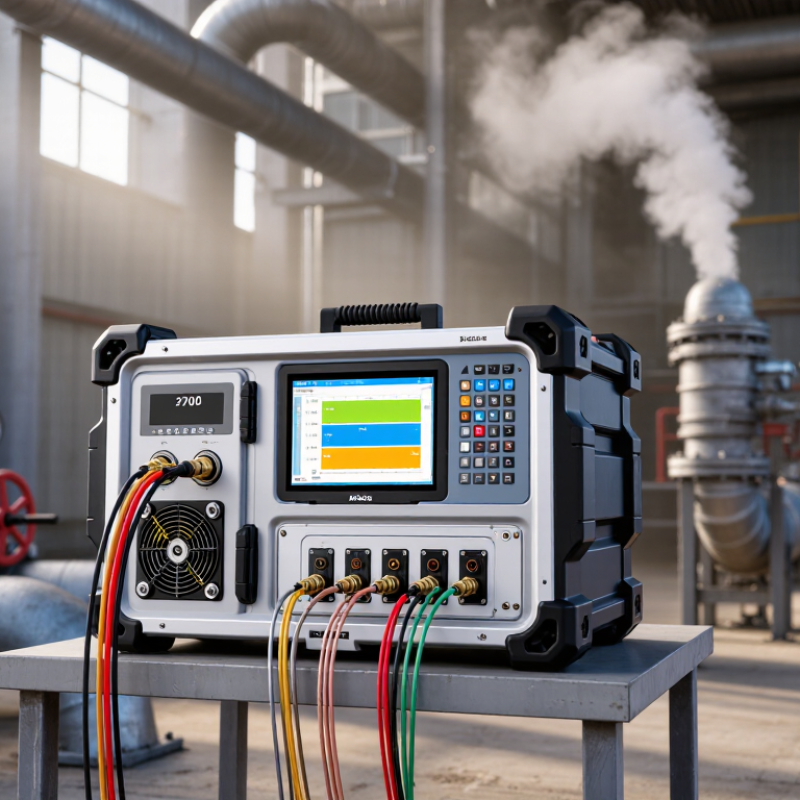
A 2700-series portable FTIR gas analyzer uses infrared absorption patterns to identify and measure multiple gases in a sample. Its core value is seeing several components in one measurement, rather than relying on a separate sensor for each gas. This can help operators compare changing concentrations during a field survey or process check. Clear trends matter.
Portability is useful when samples come from different points, but the instrument still depends on careful sampling. Check whether its measurement range, detection limits, response time, and gas library match the target gases. A warm sample line, for example, may help prevent condensation when moisture could affect the sample. Confirm the recommended setup for the intended application.
FTIR readings are not magic. Interfering compounds, leaks, or poor calibration can weaken results. A neat screen can still mislead. Before choosing a unit, review calibration procedures, data logging, battery life, and how easily staff can verify a reading. Compare a field result with a suitable reference method when the decision is important. Even a capable analyzer has limits, and those limits deserve attention.
Evaluate Sampling, Portability, and Operating Conditions
Choosing an IRS 2700 Series portable FTIR gas analyzer starts with the sample, not the display. List target gases, expected concentration ranges, moisture, temperature, and possible particulates. A short, heated sampling line can reduce condensation, but it may add setup time and power demand. Confirm that inlet materials suit the gas mixture, and check whether filters or dilution are needed. Small details matter.
Portability means more than carrying weight. Consider case size, battery runtime, warm-up time, and whether one person can position the probe safely. Field measurements may involve vibration, dust, changing temperatures, or limited power. Compare published operating limits with actual site conditions, not an ideal indoor test. Also review calibration intervals and data export options; teams sometimes overlook them until a report is due. That happens.
Tips: Test a representative sample through the complete probe-and-line setup. Record response time and repeatability. Leave room for uncertainty: a convenient setup can still miss changes caused by a wet sample or shifting gas concentrations.
Compare Measurement Performance and Configuration Options
When comparing portable FTIR gas analyzers, look beyond the number of gases listed on the display. Check the measurement range, detection limit, response time, and spectral resolution for each target gas. A fast reading is useful near a changing process line, but it may be less valuable if humidity or overlapping absorption bands affect accuracy. Ask for test data under conditions close to your own.
Try the instrument with a representative gas mixture, if possible. Watch how readings behave after a sample-line change, and note how long stabilization takes. Small details matter. A heated line can help prevent condensation, while suitable filters may reduce dust entering the sampling system. Confirm that the pump, battery, and fittings match your sampling routine. Portability is not just weight; it includes how easily one person can carry, connect, and clean the unit.
Configuration choices should reflect the site, not just a checklist. Consider the number of simultaneous gas channels, data logging, alarm settings, and whether measurements need to be reviewed on the instrument or exported later. Calibration frequency and access to reference gases also affect day-to-day reliability. It is easy to overlook this. Specifications rarely capture every field complication, so compare repeatability across several runs and record any drift. A short trial can reveal inconvenient setup steps that a brochure cannot.
Check Calibration, Maintenance, and Technical Support Needs
When choosing an IRS 2700 Series portable FTIR gas analyzer, check how calibration works in the field, not just in a laboratory. Ask whether certified reference gases can cover your expected concentration range and whether the analyzer can verify readings before and after a sampling run. U.S. EPA Method 320 sets a calibration-error criterion of less than 5% of the calibration-gas value, a useful benchmark for evaluating measurement quality. Confirm that the supplier can document calibration results and explain how often checks are recommended for your gases and operating conditions. A dusty site or frequent transport may change the answer.
Maintenance affects uptime. Find out how to inspect sample tubing, clean optical surfaces, replace filters, and identify moisture or particle interference. Ask for realistic service intervals and the time needed to return a unit for repair. Small details matter. Can your team get help interpreting a noisy spectrum at the job site, or only during office hours? Check support response times, training options, spare-part availability, and warranty coverage in writing. Keep a simple log of calibration checks, cleaning, and faults; it can reveal recurring problems. I would not assume one schedule fits every site. Your actual gas mix and field conditions should guide it.