

How to Choose the Best Arc Floor Lamp?
Choosing the best arc floor lamp is about more than finding a striking shape. The right one must fit your room, provide useful light, and feel steady in everyday use. Arc Floor Lamps can reach over a sofa or reading chair without taking up space on a side table. That reach matters. So does the lamp’s footprint: a wide base may crowd a narrow walkway, even when the shade seems perfectly placed.
Before comparing styles, measure the space from the base to the spot you want to illuminate. Check ceiling height, nearby furniture, and whether the arm can clear shelves or curtains. A tape measure helps. It is easy to focus on a polished finish or oversized shade and overlook how the lamp will work at night. Ask whether the light is adjustable, whether the bulb is replaceable, and how simple the controls are to reach. A dimmer can be useful for moving between focused reading and softer evening light, but only when the lamp and bulb support it.
This guide looks at size, stability, brightness, materials, and placement so you can compare options with practical needs in mind. Product descriptions do not always show how a lamp behaves in a real room. That deserves a second look. Consider your flooring, household traffic, and the chair you actually use, rather than an idealized showroom setup. A lamp can be beautiful and still be awkward. The best choice balances appearance with dependable, comfortable light.
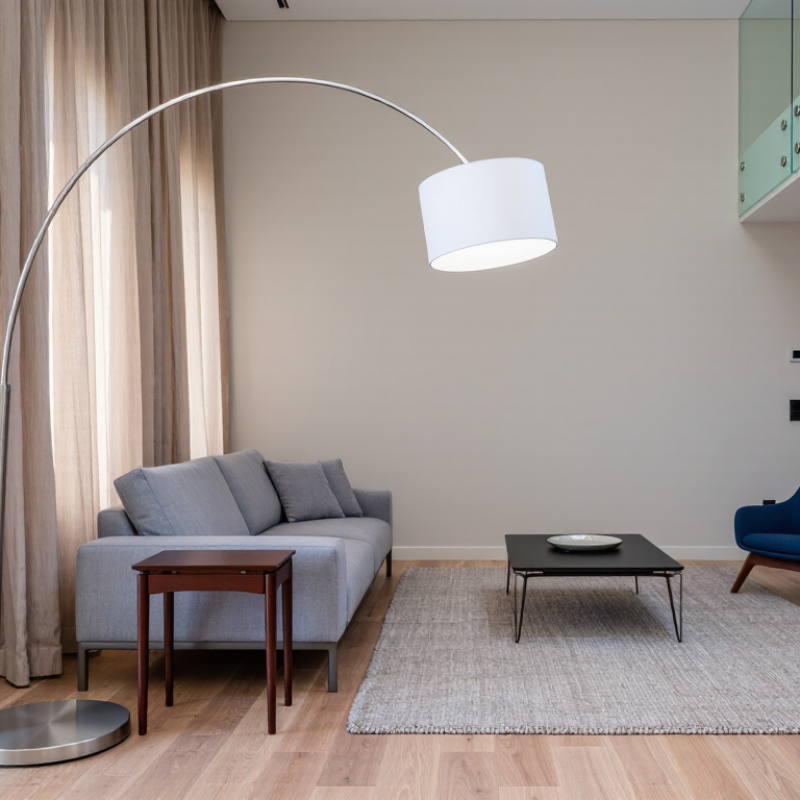
Understand the Main Types and Features of Arc Floor Lamps
How to Choose the Best Arc Floor Lamp?
Understand the Main Types and Features of Arc Floor Lamps
Arc floor lamps vary by arm design and adjustability. A single-arm model reaches over a sofa or reading chair, while multi-arm versions spread light across a wider seating area. Adjustable arms let you change the shade’s position; fixed designs are simpler, but offer less flexibility. Measure the reach before buying. A lamp that looks generous in a showroom may fall short beside a deep sofa.
Check the base as carefully as the arc. A broad, heavy base helps steady a long arm, though it can occupy valuable floor space. Shade shape also matters: a downward-facing shade concentrates light on a book, while a wider opening can soften illumination across a room. Look for accessible controls and compatible dimming if you want to shift from reading light to a gentler evening glow. The U.S. Department of Energy’s LED guidance reports that LEDs use at least 75% less energy and last up to 25 times longer than incandescent lighting. Choose a suitable bulb and confirm its fit, brightness, and color temperature. Small details count. I’d still test the switch location in the room; product descriptions rarely make that feel important.

Assess Your Lighting Needs and Room Layout
Before choosing an arc floor lamp, map where light is needed: a reading chair, the end of a sofa, or a dim corner. Measure from the lamp’s base to the target surface, then check the arc’s reach and the shade’s position. The base should not block a walkway, and the arm must clear shelves, doors, and seated heads. Measure before you buy. A quick sketch helps, though it will not capture every awkward angle.
Consider both brightness and glare. EN 12464-1:2021, a European workplace-lighting standard, sets 500 lux as a benchmark for reading and writing tasks. That is not a residential rule, but it gives you a useful comparison for a desk or focused reading spot. Check the lamp’s lumen output and whether its shade directs light onto the page rather than into your eyes. A dimmer can make the same lamp work for quiet evenings. I have found room measurements can still miss one thing: a wide shade may feel oversized once it hangs above a sofa. Think about that visual weight, plus nearby windows and existing ceiling lights, before deciding where the base belongs.
How to Choose the Best Arc Floor Lamp? – Assess Your Lighting Needs and Room Layout
Use this guide to match an arc floor lamp’s light output, reach, and footprint to your room and everyday activities.
| Lighting Need | Room or Furniture Setup | Useful Lamp Features | Placement and Clearance Checks | What to Look For |
|---|---|---|---|---|
| Reading or handwork | Armchair, sofa end, or hobby seat where overhead room lighting is not enough. | A shade that directs light downward; a dimmer or adjustable brightness; a bulb compatible with the lamp’s stated wattage and dimming requirements. | Position the base outside the main walking path. Check that the shade can reach above the seating area without blocking a doorway or television view. | Choose a setup that provides focused light at the activity area. Around 300–500 lux is a common target for reading and other detailed tasks; the needed bulb output depends on shade design and distance. |
| Soft ambient lighting | Living room or bedroom that feels dim after sunset, especially beside a sofa or in an unused corner. | A broad or upward-facing shade, diffused light, and dimming for adjusting the mood. | Allow room for the curved arm and shade above furniture. Keep the base clear of regular routes through the room. | Use the lamp as a supplement to other room lighting. General ambient lighting is often planned in the range of about 100–200 lux, with actual needs varying by activity and preference. |
| Lighting over a table | Side table, compact dining area, or table beside a sectional sofa. | An arm with sufficient horizontal reach and a shade that directs light onto the table; a stable, weighted base. | Measure from the proposed base position to the center of the table. Confirm the shade clears seated occupants and does not interfere with chairs. | Compare the lamp’s published reach with your measurements rather than judging by appearance. Arc reach and base size vary considerably by design. |
| Lighting for a large seating area | Wide sofa, sectional, or open-plan living room with limited access to ceiling lighting. | A longer reach, sturdy construction, adjustable brightness, and a shade that suits the scale of the seating area. | Map the base location and the full overhead arc. Check clearance from walls, shelves, ceiling fans, and the edges of furniture. | Make sure the lamp can illuminate the intended seat without placing its base where it may be bumped or tripped over. |
| Small room or tight layout | Apartment living room, narrow bedroom, or space with frequent foot traffic. | A compact base, a shorter or adjustable arm, and a shade that can be positioned without projecting into a walkway. | Measure the base footprint and leave clear passage around it. Test the proposed placement with furniture doors, drawers, and walkways in mind. | Prioritize a safe, unobstructed route over maximum reach. A wall-adjacent placement may work if the arm and shade do not collide with the wall. |
| Flexible use | A shared room used for reading, relaxing, and entertaining. | A dimmer, a movable or pivoting shade, and a bulb color temperature suited to the room’s other lights. | Check that adjustments can be made easily and that the arm remains stable in each intended position. | Warm-white light around 2700–3000 K is commonly chosen for a relaxed living-room feel; a dimmer helps accommodate different activities. |
Before buying: Measure the ceiling height, base footprint, desired reach, and clearances around furniture. Check the product’s maximum bulb wattage, bulb type, dimmer compatibility, and assembly requirements. Brightness at the task area depends on the bulb, shade, distance, and surrounding light.
Measure the Space and Check Lamp Dimensions
Before choosing an arc floor lamp, measure the spot where its base will stand and the area its shade must reach. Record the base diameter, total height, and horizontal arc reach from the product specifications. Then mark the base on the floor with painter’s tape and check that the shade can sit over your sofa or reading chair without blocking a walkway. A few inches matter. An overlooked door swing or a low ceiling can make a graceful curve feel awkward.
Check the light at the task, not just the lamp’s height. The Illuminating Engineering Society’s Lighting Handbook discusses illuminance in lux; around 300 lux is a useful reading-task benchmark, though room finishes and eyesight affect comfort. CIE’s indoor-workplace guidance lists 500 lux for reading and writing, a workplace figure rather than a home rule. These numbers show why reach and shade position matter: light must land on the page, not your eyes. I still find the tape test easy to rush. Sit in your usual chair and check the shade’s clearance, glare, and shadow before deciding. A lamp that fits on paper may feel wrong in use.
Compare Materials, Styles, Bulbs, and Light Output
How to Choose the Best Arc Floor Lamp?
An arc floor lamp needs to fit both the room and its furniture. Measure the base footprint and the arm’s reach before choosing a style. A heavy stone base can feel steady beside a sofa, while a slim metal frame suits tighter corners. Check the shade angle, too. A beautiful curve is not useful if it shines into someone’s eyes.
Bulbs and light output deserve equal attention. The U.S. Department of Energy’s LED Lighting factsheet says LEDs use at least 75% less energy and can last up to 25 times longer than incandescent lighting. Those are broad comparisons, not a promise for every bulb. Compare lumen ratings, not wattage alone: DOE guidance gives about 450 lumens as a common replacement for a 40-watt incandescent bulb. For a reading chair, aim the shade toward the page and check whether the bulb is dimmable. Small detail. Big difference.
Warm light, often around 2700–3000 kelvins, can make a living room feel softer; cooler settings may show details more clearly. Confirm the bulb’s color temperature on its packaging, and check that the socket and dimmer are compatible. I would not choose by finish alone. The room’s daylight, wall color, and shade material can change the result more than expected. Sometimes the lamp looks right in the shop, then feels too bright at home.
How to Choose an Arc Floor Lamp: Compare Light Output
Use lumens to compare brightness. These approximate outputs are common incandescent-bulb benchmarks; LED bulbs can provide similar brightness while using fewer watts.
Quick guide: Around 450 lumens suits softer accent lighting; about 800 lumens works well for general reading or room lighting. For brighter task lighting, consider 1,100–1,600 lumens, and check the lamp’s maximum bulb wattage and shade compatibility.
Evaluate Stability, Safety, and Ease of Assembly
An arc floor lamp reaches over a sofa or reading chair, so stability matters as much as style. Before buying, check the base diameter and overall height, then compare them with nearby furniture and available floor space. A broad, heavy base generally resists tipping better, especially on thick rugs. Check the assembly guide for weight limits and recommended bulb type. Small details matter.
Tips: Place the lamp on a level, firm surface, and keep its cord out of walking paths. Tighten each connection as instructed, but don’t force a resistant thread. After assembly, gently test whether the shade or arm shifts when touched. No guesswork.
A narrow base may look neat, but on a thick rug it can feel less reassuring; photos alone can’t confirm stability. Make sure the arm clears people’s heads and doesn’t hang too low over a seating area. For safer use, follow the manufacturer’s instructions for bulbs and electrical connections, and unplug the lamp before adjusting it. If a part seems loose or damaged, stop and check the assembly guidance rather than improvising a fix.