How to Choose the Best Glass Pool Tile?
Choosing the best Glass Pool Tile begins with more than color, shine, or a tempting showroom display. The right surface must handle water, sunlight, chemicals, temperature changes, and constant foot traffic. A beautiful blue tile can still fail when the substrate moves or the installation system is poorly matched.
Industry data supports careful selection. Grand View Research’s Ceramic Tiles Market Report identifies durability, low maintenance, and design flexibility as major demand drivers. Its 2024 analysis also shows continued growth in decorative tile applications. The Pool & Hot Tub Alliance reports millions of residential pools across the United States, creating a large and demanding renovation market. However, broad market data does not guarantee performance in one backyard. That is where technical judgment matters.
Scott Carothers, a respected tile-industry educator, states, “Glass tile demands a sound setting system, not shortcuts.” His warning reflects a common field mistake. Installers may focus on the tile and overlook waterproofing, movement joints, adhesive compatibility, or grout selection. Those details decide whether the surface remains bright after years of exposure.
A practical choice should consider tile thickness, mounting method, slip resistance, shade variation, and manufacturer testing. Check technical sheets, not just product photographs. Ask whether the tile is rated for submerged applications. Confirm that the adhesive and grout are approved for the same environment.
No tile is perfect.
Even premium glass can show installation defects. This guide examines the evidence, the materials, and the compromises behind a reliable Glass Pool Tile decision.
Define Pool Requirements and Tile Performance Needs
Choosing glass pool tile starts with the water environment, not the color chart.
The Pool & Hot Tub Alliance reports approximately 10.4 million residential swimming pools in the United States. That scale reflects varied conditions, from shaded courtyards to heavily used outdoor pools. Measure water temperature, sanitizer type, pH range, sunlight exposure, freeze-thaw risk, and cleaning methods. Saltwater, heated water, and chemical imbalance can test tile surfaces and grout differently.
Glass tile usually offers very low water absorption, but confirm the actual test results.
Ask for ASTM C373 absorption data, thermal-shock testing, and chemical-resistance information. ASTM C484 can help assess thermal-shock performance. These tests support decisions; they do not guarantee every installation. The Tile Council of North America emphasizes that substrate preparation, movement joints, waterproofing, and setting materials affect tile performance. Tile alone cannot correct a flexible or poorly drained pool shell.
Safety needs separate attention.
ANSI A326.3 evaluates dynamic coefficient of friction for hard flooring, but it is not a universal guarantee for submerged surfaces or pool steps. Request wet-condition data and review the intended location with a qualified installer. Small mosaic pieces may improve grip through more grout joints. Yet excessive joints can increase cleaning demands. I would avoid choosing solely by appearance. That mistake is common. A written performance checklist, site inspection, and compatible installation system provide stronger evidence than attractive samples. Allow room for doubt, especially when the supplier’s test conditions differ from your pool’s real temperature and chemistry.
Compare Glass Tile Types, Finishes, Colors, and Sizes
How to Choose the Best Glass Pool Tile?
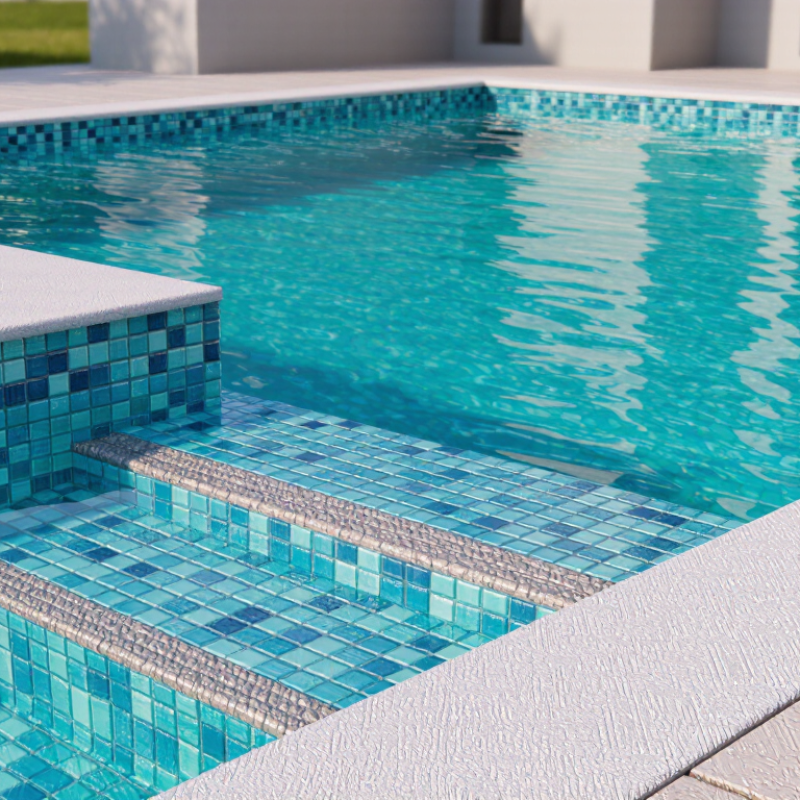
Glass tile selection starts with type, finish, color, and size. Cast glass is dense and durable, while fused glass offers sharper color variation. Recycled glass can look beautiful, but quality differs between batches. Always confirm submerged-use approval and installation guidance. ANSI A137.2 provides performance requirements for glass tile, including dimensional consistency and surface quality. That matters.
Finish changes the pool’s appearance dramatically. Glossy surfaces reflect sunlight and make water look brighter. Iridescent finishes create shifting blue, green, or silver tones. Textured finishes can improve visual depth, but they may collect mineral deposits. Test it wet. The color also changes underwater. Pale blue enlarges a small pool visually, while cobalt creates stronger contrast. Dark colors can reveal calcium marks more easily. According to Grand View Research, the global ceramic tile market reached approximately 227.6 billion dollars in 2023, showing continued investment in durable surface materials. PHTA’s 2024 State of the Industry reporting also highlights renovation demand across existing pools.
Size affects both design and maintenance. One-inch mosaics follow curved steps well and simplify detailed borders. Two-inch tiles offer a practical balance between flexibility and cleaning. Larger pieces create fewer grout lines, but they require flatter surfaces and more precise installation. I once preferred a dramatic dark finish, then reconsidered its maintenance burden. Industry reports vary, and tile performance still depends heavily on water chemistry, substrate preparation, and workmanship.
Evaluate Safety, Durability, Water Resistance, and Maintenance
Choosing the best glass pool tile begins with safety under wet conditions.
Smooth glass can become slippery, especially on steps and shallow ledges. Choose tiles with a tested slip-resistant surface for submerged areas. Small mosaics also provide more grout lines and better foot contact. Avoid sharp corners and inspect the edge finish carefully. Safety problems often appear after installation.
Durability depends on more than tile thickness.
Look for glass rated for pools, repeated temperature changes, and regular chemical exposure. Strong adhesive and flexible grout are equally important. A waterproof tile cannot protect a poorly prepared surface. Check the substrate, expansion joints, and drainage before installation. Cold climates require extra attention to freeze-thaw performance. I would not rely on appearance alone.
Glass is naturally nonporous, so it resists water absorption and staining.
However, grout can collect oils, algae, and mineral deposits. Keep the water chemistry balanced according to professional pool guidance. Brush the tile gently with a soft tool, and remove calcium buildup before it hardens. Avoid abrasive powders and harsh unapproved cleaners. Monthly inspections can reveal loose pieces or cracked grout early. Still, maintenance is not effortless. Even premium-looking tile can dull when cleaning routines are ignored.
Check Installation Methods, Compatibility, and Professional Standards
Choosing the best glass pool tile starts with installation, not color. A beautiful tile can fail when the surface is damp, uneven, or poorly prepared. The pool shell must be stable, clean, and properly cured. Installers should use adhesives and grout designed for continuous water exposure. Glass also reacts to heat and movement, so expansion joints deserve careful attention.
Compatibility matters at every layer. Check whether the tile suits submerged use, water chemistry, temperature changes, and the chosen setting materials. Large sheets may install faster, but their mesh backing can create weak points if coverage is incomplete. Smaller tiles often follow curved steps more easily. Verify the tile’s slip resistance on pool floors and steps. Local building rules and recognized pool-construction standards should guide the work. A qualified professional can document these checks.
Tips: Request a small water-exposure sample before ordering. Inspect color under sunlight and underwater lighting. Ask the installer to show mortar coverage after placing a test section. Keep extra tiles for future repairs. I once saw a visually perfect installation fail because the substrate was rushed. That mistake was preventable, but it proves that appearance cannot replace preparation. Even experienced crews should pause, test, and question the method.
How to Choose the Best Glass Pool Tile?
Compare common installation approaches against key pool conditions. The 0–5 values are a practical screening index, not laboratory test results: always verify the tile, mortar, grout, waterproofing system, and local requirements together.
Professional checkpoints: For submerged installations, confirm continuous-immersion approval, use a compatible waterproofing and setting system, provide movement joints, and select grout with suitable water and chemical resistance. ANSI A137.2 covers glass tile specifications, while ANSI A108 installation standards and recognized tile-industry handbooks provide installation guidance.