How to Choose the Best Toiletry Bag in 2026?
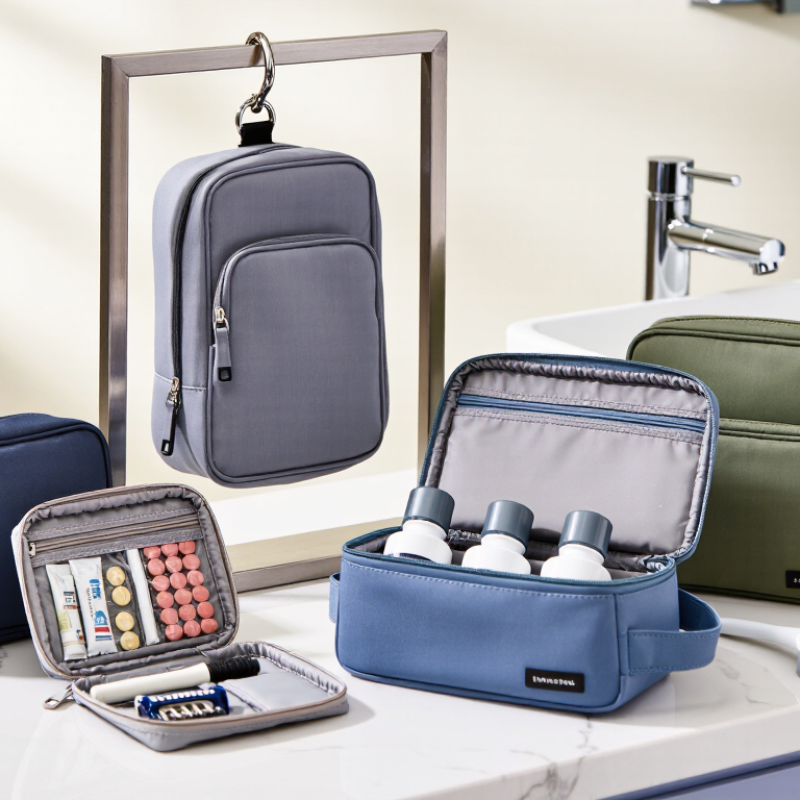
Choosing the best Toiltry Bag in 2026 requires more than comparing colors and prices. A useful bag should protect bottles, organize small items, and fit comfortably inside your luggage. In a crowded hotel bathroom, a strong hanging hook can prevent toothpaste, razors, and skincare products from touching a wet sink. That small detail matters.
Rick Steves, a respected travel educator and packing expert, often gives one clear instruction: “Pack light.” His advice applies directly to toiletry storage. A compact Toiltry Bag encourages travelers to carry only what they regularly use. However, compact does not always mean practical. A narrow design may save space but hide shampoo bottles at the bottom. That can become irritating during a rushed morning.
Look for water-resistant fabric, smooth zippers, washable lining, and transparent pockets. Check the internal height before buying. Some travel bottles stand upright, while others leak when packed sideways. A removable pouch can also separate medicines, cosmetics, or grooming tools without creating clutter. Avoid choosing only by appearance. A beautiful bag with weak stitching may fail after several trips.
There is no perfect option.
This guide compares capacity, durability, organization, cleaning, and portability. It also considers personal habits, because a minimalist traveler needs different storage than someone carrying full-size skincare products. Some recommendations may seem overly cautious. That is intentional. Small failures, such as a broken zipper or spilled lotion, often reveal more than attractive product photographs.
Define Your Packing Profile with TSA’s 3-1-1 Rule: 100 mL Containers
How to Choose the Best Toiletry Bag in 2026?
Your packing profile starts with the liquids you actually use, not the bag’s appearance. TSA’s 3-1-1 rule allows one quart-sized, clear bag for liquids, gels, aerosols, creams, and pastes. Each container must hold 100 mL or less, even when partly empty. Keep every approved container inside that single bag. Measure it. A large bottle is still too large.
I learned this after carrying a half-used shampoo bottle through a busy airport. It looked nearly empty, but its size still failed the check. Now, I choose compact containers with readable volume markings and tight lids. I also leave space for toothpaste, face cleanser, sunscreen, and contact solution. Do not count on “travel size” wording alone. Confirm the actual capacity.
Your toiletry bag should hold the 3-1-1 bag without crushing it. A washable lining helps when one cap leaks. Wide openings make small containers easier to find. Separate dry items, such as a razor or comb, from liquids when possible. Clear sections can reduce inspection time. Still, perfect organization is unrealistic. I sometimes pack one unnecessary item, then regret its weight. Before leaving, remove duplicates and test each lid over a sink. Keep essential medication in its original, clearly labeled packaging, and check current airport guidance before traveling.
Match Bag Dimensions to IATA’s Typical 56 × 45 × 25 cm Cabin Limit
How to Choose the Best Toiletry Bag in 2026?
A toiletry bag should fit your packing plan, not merely look compact. The often-used cabin reference is 56 × 45 × 25 cm, but IATA notes that airlines set their own baggage rules. Treat this measurement as a planning ceiling, not a promise. A practical toiletry bag usually needs about 30 × 20 × 8–10 cm when packed. That leaves space for clothing and prevents a crowded cabin bag from becoming difficult to close.
Measure the filled bag, including bulging sides and rigid caps. Soft fabric helps, but overstuffing can quickly add several centimetres. My own packing test exposed an annoying flaw: a slim bag became bulky after adding a pump bottle and a small electric shaver. Real packing is less tidy than product photographs suggest. Check the bag beside a ruler, then place it inside your intended cabin luggage.
This matters because SITA’s 2024 Baggage IT Insights report recorded 6.9 mishandled bags per 1,000 passengers in 2023. Better organization cannot prevent every baggage problem, but it can reduce loose items and rushed repacking. Choose a washable interior, strong seams, and compartments that hold bottles upright. Keep frequently used items near the opening. Leave unused space. That habit feels inefficient, yet it makes security checks and gate changes less stressful. Recheck the airline’s current dimensions before departure, especially when several carriers are involved.
How to Choose the Best Toiletry Bag in 2026?
Match your toiletry bag dimensions to the typical IATA cabin-bag limit of 56 × 45 × 25 cm. The comparison below uses practical illustrative bag sizes; always check the specific airline’s current allowance before flying.
A compact bag measuring around 25 × 15 × 8 cm is easiest to fit into a carry-on. A medium option offers more capacity while remaining well below the typical cabin limit. An expanded bag measuring 32 × 22 × 12 cm still fits within the stated maximum dimensions, but its packed shape and surrounding luggage space should be checked carefully.
Compare Fabric Strength Using ISO 12947 Abrasion-Test Standards
How to Choose the Best Toiletry Bag in 2026?
Fabric strength deserves more attention than color or pocket count. ISO 12947 evaluates abrasion resistance with a Martindale test, rubbing fabric against a controlled abrasive surface. Results are reported in cycles before visible damage, yarn breakage, or a defined endpoint. Higher cycles usually suggest better resistance to friction from bottles, zippers, and bathroom counters.
Look for test results, not vague words like “durable.” A toiletry bag rated at 20,000 cycles may suit occasional travel, while frequent travelers should consider 40,000 cycles or more. These figures are practical guides, not universal grades. ISO 12947 does not set one pass-or-fail number for every bag. Construction also matters. A tightly woven nylon may resist rubbing, yet weak stitching can fail first.
Textile Exchange’s 2024 Materials Market Report estimated global fiber production at about 124 million tonnes in 2023, with polyester remaining the dominant fiber group. That scale explains its common use in travel accessories, but volume does not prove durability. Check fabric weight, seam reinforcement, and whether testing used the actual laminated material. I would also inspect the corners personally. They often show wear first. One limitation remains: laboratory rubbing cannot fully copy wet bathrooms, spilled shampoo, or overloaded packing. That is easy to forget.