How to Choose the Right Laser Diode for Your Application?
Choosing the right Laser Diode for your application is critical. It impacts performance, efficiency, and overall success. Dr. Emily Carter, a leading expert in photonics, once stated, “Selecting the right laser diode can make or break your project.” Her insight highlights the necessity of understanding your specific requirements.
Laser Diodes come in various types, wavelengths, and packaging. Each of these factors plays a significant role in their effectiveness. For instance, applications range from medical devices to telecommunications. Therefore, knowledge about your application's needs will help narrow your options.
Additionally, the landscape of Laser Diodes is constantly evolving. New technology and designs emerge regularly. This rapid development can lead to confusion when choosing the right component. Collaborating with specialists or conducting thorough research can mitigate this issue. Proper selection begins with understanding. It requires careful consideration of both technical specifications and practical applications.
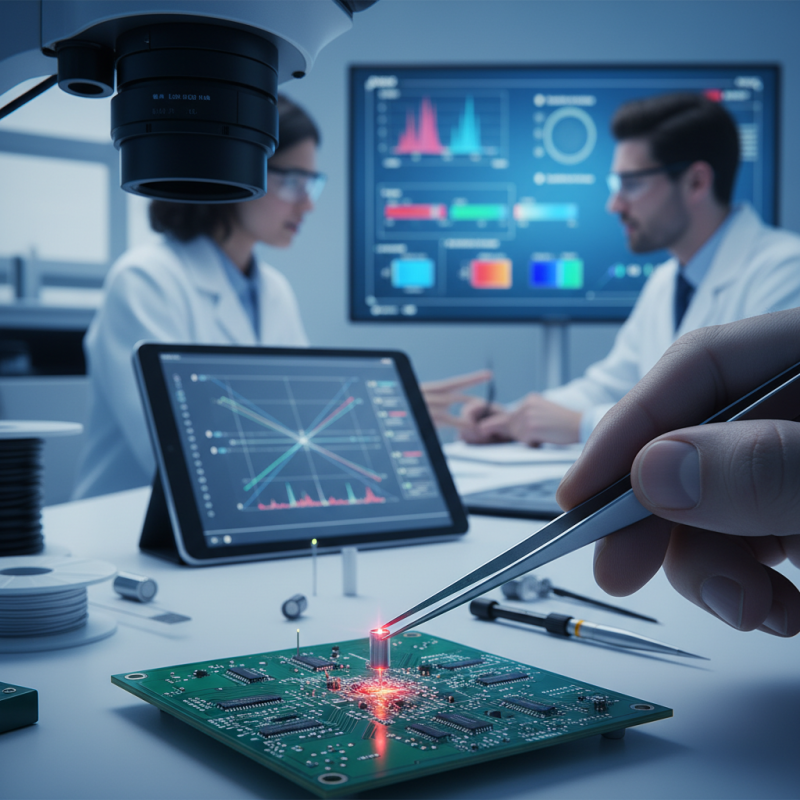
Understanding Laser Diode Operating Principles and Characteristics
When choosing a laser diode, it’s essential to understand its operating principles and characteristics. Laser diodes operate based on the principle of stimulated emission. When electrons drop to a lower energy level, they emit photons, creating light. This light is coherent and monochromatic.
Before selecting a diode, consider the wavelength. Different applications require specific wavelengths. For example, blue laser diodes are common in optical storage. On the other hand, infrared diodes are prevalent in sensing applications.
Tip: Check the light output and modulation speed. High-speed applications need diodes with fast modulation capabilities.
Additionally, evaluate the thermal management of the diode. Proper cooling mechanisms can enhance performance and longevity. Selecting a diode with a suitable package can dramatically influence heat dissipation.
Tip: Ensure you consider the drive current ratings. Exceeding these can shorten diode life.
Understanding these factors helps in selecting a diode that meets your needs. It’s crucial to weigh the details before making a final decision.
Laser Diode Characteristics Comparison
This chart compares various characteristics of different laser diodes, including output power, wavelength, operating current, and efficiency. Understanding these parameters is essential in selecting the appropriate laser diode for specific applications.
Evaluating Wavelength Requirements for Specific Applications
When selecting a laser diode, wavelength is key. Each application has specific wavelength needs. Medical, industrial, and communication sectors require different light outputs. For instance, medical devices may require wavelengths around 800-900 nm for optimal tissue penetration. In contrast, fiber optics often use near-infrared light, usually around 1300 to 1550 nm. Understanding these nuances is vital for achieving the desired results.
The environment also influences wavelength choices. If the application occurs in a humid atmosphere or near reflective surfaces, certain wavelengths might scatter more. This scattering can reduce accuracy and efficiency. Additionally, you might face challenges when wavelengths interact with materials. Some substances absorb certain wavelengths poorly, leading to energy loss. This complexity demands careful evaluation.
Testing various wavelengths can be insightful. Sometimes, initial choices may not yield expected outcomes. A wavelength that seems ideal might not perform well in real-world conditions. Conducting experiments will provide clarity. Engaging with laser sources beyond your initial picks can lead to surprising discoveries. Be prepared for adjustments based on unforeseen factors.
Assessing Power Output and Efficiency for Optimal Performance
When selecting a laser diode for your application, understanding power output and efficiency is crucial. A report from the Laser Institute of America notes that consistent power output is necessary for applications like materials processing and medical devices. For instance, industrial lasers often require a continuous wave output of over 100 mW to ensure effective cutting. However, lower power models can suffice for tasks like laser pointing.
Efficiency in laser diodes is measured in terms of wall-plug efficiency, which indicates how effectively electrical power is converted into optical power. According to a recent study by the International Society for Optical Engineering, the best laser diodes boast efficiencies exceeding 70%. Selecting a diode with high efficiency reduces the need for elaborate cooling systems, minimizing operational costs.
Tips: Evaluate the thermal management requirements. As power increases, so does heat generation. Poor heat management can lead to performance degradation.
Another consideration is the wavelength. Different applications necessitate specific wavelengths to achieve optimal results. For example, 980 nm lasers work well for medical applications, while 660 nm lasers are preferred in horticulture. Understanding your application’s specific needs ensures you select a diode that not only meets power requirements but also aligns with efficiency demands.
Identifying Thermal Management and Packaging Options
Thermal management plays a crucial role in the performance of laser diodes. According to industry reports, ineffective thermal handling can reduce diode efficiency by up to 30%. This inefficiency often leads to premature failure, which is a significant concern for applications demanding high reliability. The challenge lies in selecting the appropriate packaging options that ensure effective heat dissipation while maintaining the diode's integrity.
Choosing the right packaging involves several factors. Common materials include ceramic and metal, both known for their thermal conductivity. A study by the Laser Institute of America suggests that ceramic packages can provide better thermal performance. However, they may have higher manufacturing costs. Balancing costs and performance is not straightforward. Understanding the specific application requirements, such as environmental conditions, is essential.
Sometimes, designers overlook thermal interface materials. These materials can significantly influence heat transfer but are often considered secondary. A proper interface can enhance thermal conductivity, resulting in improved diode performance. However, selecting an inappropriate material could lead to bottlenecks in heat dissipation. Continuous testing and refinement are necessary to optimize thermal management strategies for laser diode applications.
How to Choose the Right Laser Diode for Your Application?
| Parameter | Option 1 | Option 2 | Option 3 |
| Wavelength (nm) | 650 | 780 | 850 |
| Output Power (mW) | 5 | 30 | 100 |
| Beam Divergence (degrees) | 20 | 30 | 50 |
| Package Type | TO Can | Surface Mount | C-Mount |
| Thermal Management | Passive Cooling | Active Cooling | Liquid Cooling |
Comparing Cost and Reliability Factors in Laser Diode Selection
When selecting a laser diode, understanding cost and reliability is crucial. Costs can greatly vary based on performance and application requirements. Higher-quality diodes tend to cost more, but they often provide better longevity. Investing in a reliable diode can save money in the long run by reducing replacements and downtime.
Reliability factors include thermal stability and operational lifespan. Some diodes may perform well initially but can degrade quickly under specific conditions. Testing different models may reveal a trade-off between cost and reliability. A less expensive diode might fail when you need it most. Thus, understanding your specific needs is vital.
Consideration of environmental factors is essential. A diode used in a stable, controlled setting may not need the same durability as one in fluctuating conditions. This impacts both design and cost. Balance your options carefully to ensure that your chosen diode meets both budget and operational demands.