What is a geomembrane welding machine and how does it work?
The geomembrane welding machine is a vital tool in the geosynthetics industry. It is used for waterproofing and containment applications, particularly in landfills, water treatment, and containment ponds. According to a report by Research and Markets, the global geomembrane market is projected to reach $4.6 billion by 2027, indicating steady growth in the field.
Dr. Emily Thompson, a leading expert in geosynthetics engineering, emphasizes the importance of precision in this area. She stated, “The effectiveness of geomembrane installation heavily relies on the quality of the welding process.” This highlights that a reliable geomembrane welding machine is crucial for project success.
Despite advancements, challenges remain in ensuring consistent weld integrity. Flaws in welding can lead to significant leakage issues. Continued research is essential to refine these machines and their operation. Future technology must adapt to meet increasing environmental standards and project demands. This evolution will shape the future of waterproofing solutions through geomembrane technology.
What is a Geomembrane Welding Machine?
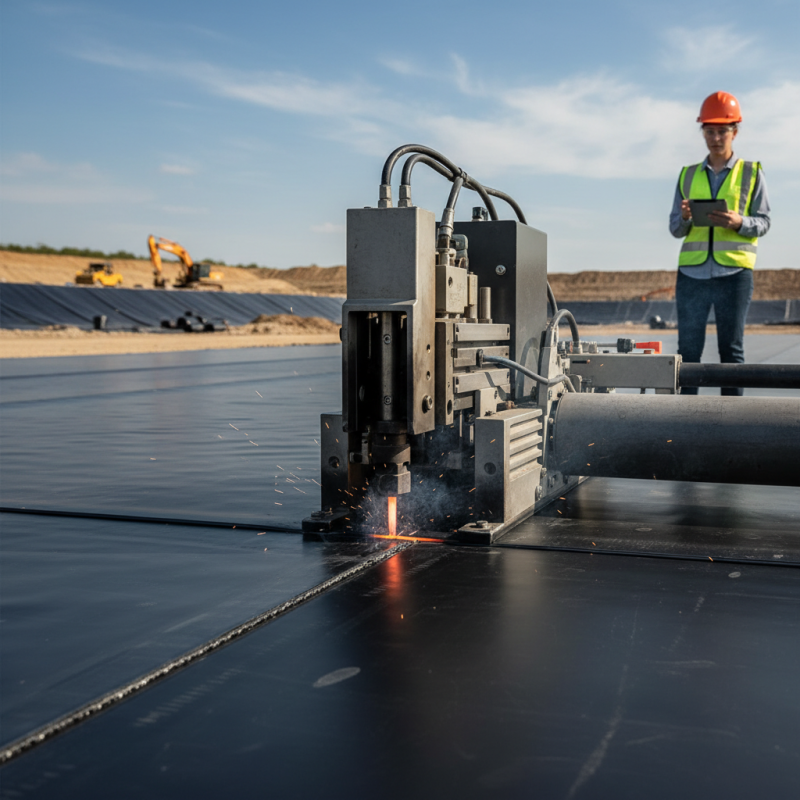
A geomembrane welding machine is a specialized tool used in construction and environmental projects. It is designed to join geomembranes, which are impermeable membranes essential for preventing fluid migration. Common materials include HDPE (High-Density Polyethylene) and PVC (Polyvinyl Chloride). The welding process creates seamless joints that can withstand various environmental pressures.
These machines operate through different welding techniques. Hot air welding and extrusion welding are the most prevalent methods. In hot air welding, the machine emits hot air to soften the geomembranes' edges, allowing them to fuse effectively. Extrusion welding involves feeding a strip of molten plastic into the joint, adding strength to the connection. According to the Geosynthetics Institute, proper welding increases the longevity and reliability of geomembrane installations by over 30%.
Precision is crucial in this industry. Misalignment during the welding process can lead to leakage or failure. Studies show that over 20% of geomembrane installations experience issues due to poor welding practices. Operators must be trained and experienced. Regular inspection and maintenance of welding machines help avoid common pitfalls. Successful projects depend on both technology and the human element involved in the process.
Types of Geomembrane Welding Machines Available
Geomembrane welding machines play a crucial role in various industries. They are designed to create strong seams in geomembranes, ensuring waterproofing and durability. There are several types of welding machines available, each suited for different applications.
One popular type is the hot wedge welder. This machine uses a heated blade to melt the edges of the geomembrane. When the molten edges merge, they form a strong bond. It's effective for thick materials and is often used in landfills and ponds.
Another type is the extrusion welder. This machine feeds molten material into the seam, providing added strength. It’s ideal for repairing damaged liners and is often used in construction projects.
Overlap welding machines are also significant. They use heat to bond two overlapping sheets. This method is especially useful when working in tight spaces. While these machines provide various options, each has its limitations. They may require skilled operators for optimal results.
Additionally, not all machines work well in all conditions, prompting careful selection based on specific needs. This diversity allows for flexibility but may confuse newcomers to the field. Understanding the strengths and weaknesses of each machine is essential.
Principles of Operation for Geomembrane Welding
Geomembrane welding machines play a crucial role in various industries, including construction and landfill management. The principles of operation focus on creating secure and durable seams between geomembranes. These machines utilize different welding techniques such as hot wedge, extrusion, and double track welding. Each method offers unique advantages depending on the materials and application.
Hot wedge welding employs a heated wedge to melt the edges of geomembranes. As the wedge moves, it fuses the materials together. This method ensures strong bonds and is effective with various geomembrane types. In contrast, extrusion welding feeds a filler material into the joint area, enhancing the strength of the weld. It requires careful handling to ensure optimal results.
Tension and heat control are vital during the welding process. Insufficient heat may lead to weak seams, while excessive heat risks damaging the material. Operators must monitor these factors closely to achieve a reliable outcome. Proper training and experience significantly improve the quality of the welds. Mistakes can be costly, resulting in leaks or structural failures. These challenges highlight the importance of thorough preparation and careful execution in geomembrane welding.
Applications of Geomembrane Welding in Various Industries
Geomembrane welding is vital across various industries. Its primary applications include environmental protection, water management, and waste containment. For instance, in landfills, geomembranes prevent leachate from contaminating soil and groundwater. The reliability of these liners is crucial. Installation must be precise, as any flaws can lead to severe environmental issues.
In the agricultural sector, geomembranes are used for irrigation and aquaculture. They create efficient water retention systems. However, manufacturers sometimes overlook the importance of testing these membranes under real conditions. This can lead to unexpected failures. Geomembranes also find use in mining operations. They help manage water runoff and prevent hazardous spills.
Despite their benefits, challenges remain. Geomembrane systems can degrade over time due to UV exposure. Regular maintenance and inspections are essential. Some industries are still adapting to the technology. They may need time to understand the best practices for installation and welding. It’s a continuous learning process that requires diligence.
What is a geomembrane welding machine and how does it work? - Applications of Geomembrane Welding in Various Industries
| Industry | Application | Geomembrane Material | Welding Method | Benefits |
| Landfill | Liner systems for waste containment | HDPE (High-Density Polyethylene) | Hot Air Welding | Durability and chemical resistance |
| Water Reservoirs | Water retention systems | PVC (Polyvinyl Chloride) | Extrusion Welding | Seam integrity and flexibility |
| Mining | Double-lined systems for tailings | LLDPE (Linear Low-Density Polyethylene) | Electroweld | Enhanced leak detection |
| Agriculture | Irrigation canals and ponds | EPDM (Ethylene Propylene Diene Monomer) | Hot Wedge Welding | UV resistance and longevity |
| Civil Engineering | Barrier systems for groundwater protection | Geotextiles | Overlap Welding | Cost-effectiveness and reliability |
Maintenance and Best Practices for Geomembrane Welders
Regular maintenance is crucial for geomembrane welding machines. Keeping the equipment clean helps avoid contamination. Inspect the welding tool often. Look for wear and tear on the nozzle. A damaged nozzle can lead to poor welds. Don’t ignore small issues. They can escalate into bigger problems.
Best practices for geomembrane welders include proper temperature settings. Too high can cause burning, while too low results in weak seams. Use a calibrated thermometer to check temperatures regularly. Ensure the welding surface is free from dust and moisture. These factors can affect weld quality significantly. It’s essential to train operators effectively, as their skill directly impacts the weld integrity.
Document all maintenance activities. This helps track machine performance over time. Sometimes, operators overlook this step. Performing routine checks can be tedious but pays off in prolonged equipment lifespan. Remember to keep important tools nearby. Misplacing them can delay projects and impact efficiency. Reflect on past mistakes to improve future practices.