What Is a Laboratory Sample Pulverizer and How Does It Work?
A laboratory sample pulverizer plays a critical role in materials processing and analysis. According to industry reports, the global laboratory equipment market is expected to reach $43 billion by 2026, with pulverizers being a cornerstone of this growth. These devices are designed to grind samples into fine powders, ensuring uniformity and accuracy for various analytical methods.
laboratory sample pulverizers utilize various techniques to achieve a consistent particle size. For instance, some employ mechanical force, while others use ball milling for effective sample preparation. This precision is crucial in fields like metallurgy and environmental testing, where sample integrity can significantly impact results. However, not all pulverizers meet industry standards, leading to potential discrepancies in data.
Despite advances, there are challenges in using laboratory sample pulverizers. Some models may be prone to contamination, affecting the purity of results. Additionally, the necessity for regular maintenance and calibration can be overlooked, resulting in operational inefficiencies. These factors highlight the need for careful selection and management of pulverizers in laboratory settings, as the quality of analysis hinges on the equipment used.
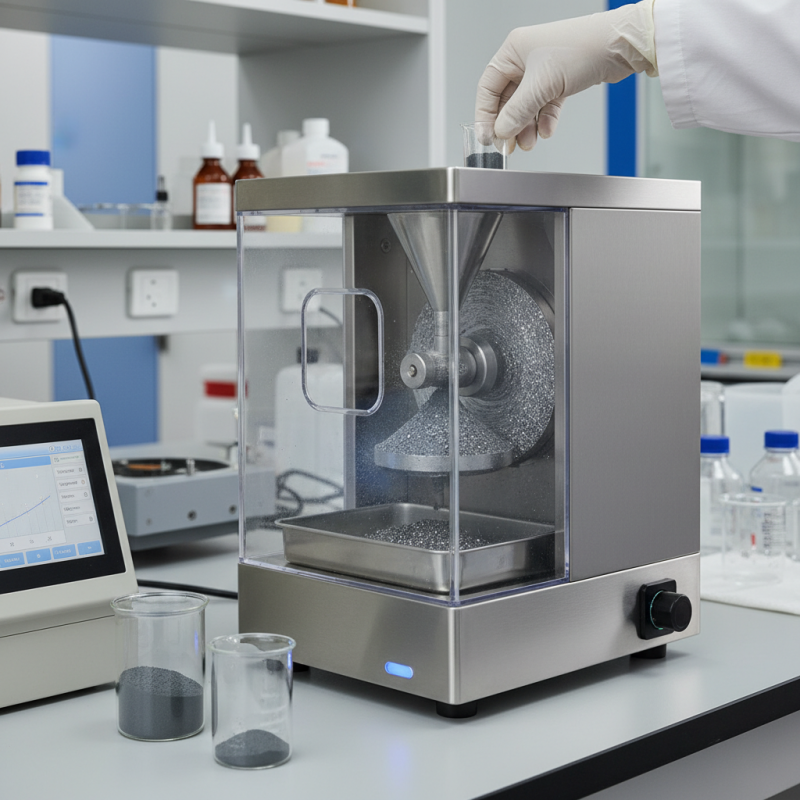
What Is a Laboratory Sample Pulverizer?
A laboratory sample pulverizer is an essential tool in material processing. It reduces solid materials into finer particles, making them easier to analyze. Common applications include materials testing and quality control in laboratories. The pulverizer can handle various substances, including minerals, rocks, and even some organic materials.
The device typically operates using a rotating plate or drum. When materials are placed inside, the spinning action crushes them. The size of the particles depends on the settings and type of pulverizer used. Adjustments can be made, but it often takes trial and error. Factors like material toughness and desired particle size play a role in the process.
Using a pulverizer can pose challenges. Some materials may clog or produce uneven sizes. Cleaning between samples can be tedious. Additionally, the noise level can be significant, requiring hearing protection. Researchers must remain attentive to avoid cross-contamination. Each experiment teaches something new, providing insights into better practices.
Laboratory Sample Pulverizer Throughput Comparison
The Purpose and Importance of Laboratory Sample Pulverizers
Laboratory sample pulverizers play a crucial role in material analysis. They reduce solid materials into fine powders, which is essential for accurate testing. The process involves using mechanical force to crush and grind samples. This method ensures uniform particle size, which aids in obtaining reliable test results.
Having a consistent sample size is vital for various scientific applications. It can dramatically affect the performance of subsequent tests. Inconsistent samples may lead to inaccurate or unreliable results. Since many industries depend on precise measurements, understanding the importance of pulverization cannot be overlooked.
Moreover, laboratory pulverizers must be properly maintained to ensure performance. Regular cleaning and timely servicing can prevent contamination. Neglecting these aspects may result in flawed experiments. Thus, researchers must reflect on their operational practices. Only with careful attention can they achieve the best outcomes from their analyses.
How Laboratory Sample Pulverizers Operate: A Step-by-Step Guide
Laboratory sample pulverizers play a crucial role in material analysis. These devices ensure samples are reduced to a fine powder. This process helps in preparing samples for various testing methods, including chemical analysis and material characterization. According to industry reports, precise pulverization can increase accuracy in results by up to 30%.
The operation of a laboratory sample pulverizer involves several steps. Initially, samples are placed in the grinding chamber. Then, the pulverizer's blades rotate, crushing the material through mechanical forces. This step requires careful attention. If samples are over-processed, they can lose quality and lead to inaccurate results. Monitoring the grinding time is vital for maintaining sample integrity.
Post-processing, samples should be examined for consistency. Not all pulverizers achieve uniformity. Variability can affect experimental outcomes. A well-maintained pulverizer improves performance. Regular checks and cleaning minimize contamination risks. These steps are essential for reliable results in laboratories, yet many overlook them. Inconsistent practices can lead to frustration and compromised data quality.
Types of Laboratory Sample Pulverizers and Their Applications
Laboratory sample pulverizers play a crucial role in material analysis. Various types exist, each with unique applications. For instance, a disc pulverizer is excellent for creating fine powders. It works by grinding materials between two plates. This method produces consistent particle sizes, which is vital in research.
Another type is the ring and puck mill. It's ideal for processing hard materials. This mill generates extreme force, reducing samples to a fine powder. Often, it is used for geological or mineral samples. Be cautious, though. Not every pulverizer is suitable for every application. Choosing the right one is essential.
Tips: Always consider the material type before selecting a pulverizer. Some machines might wear down quickly with tough materials. Also, experiment with settings to achieve desired particle size. It's a trial and error process at times, but adjustments lead to better results.
Key Features to Consider When Choosing a Pulverizer
When selecting a laboratory sample pulverizer, several key features stand out. The size of the sample input is crucial. Smaller samples are often easier to manage, while larger samples might require more robust machines. Consider whether the pulverizer can handle diverse materials. Some designs are versatile, while others focus on specific types. A good balance of flexibility and capability is necessary.
Another important feature is the grinding mechanism. Different machines utilize varying approaches, like mechanical or cryogenic grinding. Each method has benefits and drawbacks. Mechanical systems may generate heat, affecting sample integrity. In contrast, cryogenic options preserve certain properties but can be costlier. Assess your needs carefully when choosing.
In addition, the ease of use plays a vital role. Complex machinery may demand extensive training or expertise. A user-friendly design can save time and reduce error. Also, maintenance requirements must be factored in. Frequent upkeep can hinder productivity. Regular checks are often overlooked, leading to operational issues down the line. The choice of a pulverizer impacts efficiency and output significantly.