Why Choose LED Ceiling Panel Lights for Commercial Use?
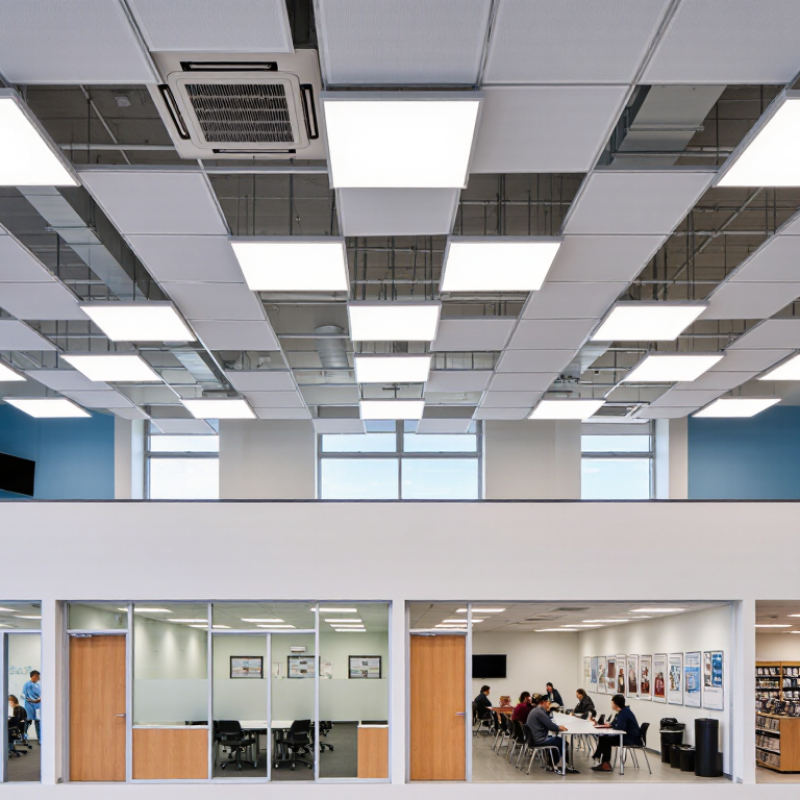
Commercial spaces need lighting that works steadily across long hours, changing tasks, and varied room layouts. A Ceiling Panel Light can provide broad, even illumination in offices, clinics, classrooms, and retail areas. Its flat profile fits many suspended ceiling grids, while a diffused face can help reduce harsh points of light. Details matter. Check the panel’s dimensions, color temperature, glare performance, and compatibility with existing controls before specifying it. A bright panel is not automatically a comfortable one.
LED panels are also valued for energy efficiency and long service life, though actual results depend on product quality, operating hours, and installation conditions. For a facilities manager, fewer lamp changes may mean less disruption in a busy corridor or meeting room. Yet replacement access still deserves attention. So does maintenance. Compare the warranty, driver specifications, and available technical documentation rather than relying on a headline claim. In a room with screens, daylight, or detailed work, test the lighting layout where possible. The best choice is not always the cheapest panel, and not every space needs the same output. A practical selection balances comfort, operating costs, ceiling constraints, and future servicing. Some trade-offs remain. This guide explores why LED ceiling panel lights suit many commercial settings, what features to assess, and where careful planning can prevent avoidable lighting problems.
What LED Ceiling Panels Are and How Commercial Spaces Use Them
LED ceiling panels are flat, broad-area luminaires that sit in a suspended ceiling grid or mount directly to a surface. Their diffusers spread light across desks, corridors, and meeting rooms, reducing the sharp pools of brightness common with small downlights. Many models use edge-lit or back-lit LED arrays, with drivers that regulate power. The distinction matters: panel size, driver quality, and dimming compatibility can affect comfort and maintenance.
In offices, clinics, classrooms, and retail spaces, panels provide even ambient light over large work areas. A facilities manager might use dimming near windows, while keeping corridors on a steady schedule. Small details count. Glare on a monitor can make an otherwise bright room tiring. The U.S. Department of Energy’s Energy Saver guidance says LEDs use at least 75% less energy and last up to 25 times longer than incandescent lighting. These figures describe LEDs generally, not a direct comparison between every panel and older commercial fixture. That caveat is easy to miss. Before replacing fixtures, teams should check light output, color quality, controls, and existing ceiling conditions; a panel that fits the grid may still feel too cool or too bright.
Energy Benchmark: DOE Says LEDs Use at Least 75% Less Energy Than Incandescent Lamps
Why Choose LED Ceiling Panel Lights for Commercial Use?
The U.S. Department of Energy says LED lighting uses at least 75% less energy than incandescent lighting. It is a useful benchmark, but not a guaranteed saving for every commercial retrofit. Many offices already use fluorescent fixtures, so compare the proposed panel’s wattage with the equipment being replaced. Check the fixture label and estimate operating hours before projecting savings.
In a busy office, dozens of ceiling panels may run through long shifts. Lower power demand can reduce lighting costs, while even, diffuse light helps limit harsh patches across desks and meeting tables. Choose panels with suitable brightness and color temperature for the space. A sample installed in one room can reveal glare or shadows before a larger order. Small detail. It can be overlooked.
Controls can improve results further. Dimming or occupancy sensors may reduce use in rooms that sit empty, though compatibility and setup matter. Keep realistic expectations: savings depend on existing lighting, operating schedules, electricity rates, and control settings. The DOE comparison concerns incandescent lighting, not every older commercial system. That distinction deserves attention. A careful energy audit may produce a less impressive number than a quick sales estimate, but it gives facility managers a sounder basis for choosing panels.
Service-Life Benchmark: DOE Says LEDs Can Last Up to 25 Times Longer
For a commercial ceiling, service life affects more than the replacement schedule. It also shapes labor costs, room access, and disruption during business hours. The U.S. Department of Energy notes that LEDs can last up to 25 times longer than incandescent lighting. That comparison is a useful benchmark, not a promise that every LED panel will run equally long.
In a busy office, a long-lived panel can mean fewer ladder setups above desks and fewer interruptions in meeting rooms. LED panels also provide broad, even light across work surfaces when they are selected for the room’s ceiling height and layout. Still, the fixture’s rated life depends on conditions. Heat buildup, frequent switching, poor electrical connections, and failing drivers can shorten service life. A panel may continue working while its light output gradually declines.
Check the rated lifetime and warranty before specifying panels, and compare them with the hours the lights will operate each day. A corridor lit around the clock has different demands from a conference room used a few hours daily. Keep ventilation paths clear and arrange periodic checks for flicker or uneven brightness. Small details matter. I have seen maintenance plans rely too heavily on a single lifespan figure; real buildings are less tidy than product testing.
Why Choose LED Ceiling Panel Lights for Commercial Use?
Service-life benchmark: DOE says LEDs can last up to 25 times longer than incandescent lighting.
The chart compares the DOE’s service-life benchmark of up to 25,000 hours for LED lighting with about 1,000 hours for incandescent lighting. Longer service life can mean fewer replacements in commercial spaces. Actual life varies by product and operating conditions; this comparison is a general lighting benchmark, not a guarantee for every ceiling panel.
Source: U.S. Department of Energy (DOE), LED lighting guidance. Values shown are approximate.
Lighting Quality: Apply IES Recommendations for Each Commercial Work Area
Commercial lighting works best when it follows the tasks people actually perform. IES recommendations provide a useful starting point for illuminance, uniformity, and visual comfort in different spaces. The right level for desk work may not suit a corridor or a detailed inspection bench. Check current IES guidance and local project requirements before setting targets.
LED ceiling panels can distribute light evenly across open offices, but placement still matters. A panel directly above a glossy monitor may create distracting reflections. Screens reveal problems. In meeting rooms, consider how faces look on camera and whether dimming can support presentations. In circulation areas, avoid abrupt bright and dark patches that make transitions uncomfortable.
Match the lighting plan to the work area, then verify it in use. Measure light at the working plane, not just beneath a fixture, and check conditions after furniture is installed. Task lights may help where precision work needs more focused illumination. They are not a substitute for a sound ambient plan. It is tempting to treat one panel layout as a solution for every room; in practice, ceiling height, finishes, daylight, and user feedback can change the result. The first layout may need revision.
Project Evaluation: Compare Panel Efficacy, Controls, and Lifecycle Costs
For commercial projects, compare LED ceiling panels by delivered efficacy, not catalog wattage alone. Review lumens per watt alongside the light reaching desks and counters. A panel may appear efficient but distribute light unevenly at a particular ceiling height. Check photometric data, glare ratings, and uniformity against the room’s actual layout. Small differences matter.
Controls can change both comfort and energy use. Specify occupancy sensors for intermittently used rooms and daylight dimming near windows. Confirm that panels, drivers, and control systems work together before ordering at scale. Ask for a sample installation or a small pilot area. Test response times, dimming range, and settings during normal work hours. Commissioning is easy to underestimate.
Lifecycle cost should include purchase, installation, electricity, maintenance, and likely driver replacement—not just the initial quote. Use the building’s operating hours and local energy rates in the estimate. Compare scenarios with and without controls, and state assumptions clearly. If maintenance intervals are uncertain, say so and allow for that uncertainty. A spreadsheet can look precise while relying on rough inputs. Recheck those inputs with facility staff before final approval.
Why Choose LED Ceiling Panel Lights for Commercial Use? — Project Evaluation: Compare Panel Efficacy, Controls, and Lifecycle Costs | Evaluation Metric | Standard LED Panel | High-Efficacy LED Panel | Dimmable LED Panel with Occupancy and Daylight Controls |
| Typical application | General offices, corridors, and back-of-house areas | Projects prioritizing lower connected lighting load | Daylit offices, meeting rooms, and intermittently occupied areas |
| Assumed delivered light output | 4,000 lumens | 4,000 lumens | 4,000 lumens at full output |
| Input power | 36 W | 30 W | 32 W at full output |
| Calculated efficacy | 111 lm/W | 133 lm/W | 125 lm/W |
| Control capability | On/off switching | On/off switching; dimming depends on the selected driver | Dimming with occupancy and daylight response |
| Assumed control-related energy reduction | None | None | 30% versus the same panel operating without controls |
| Annual operating hours used | 3,000 hours | 3,000 hours | 3,000 scheduled hours before the assumed control reduction |
| Estimated annual electricity use per panel | 108 kWh | 90 kWh | 67.2 kWh after the assumed control reduction |
| Estimated installed cost per panel | $90 | $115 | $145 |
| 10-year electricity cost per panel | $129.60 | $108.00 | $80.64 |
| Estimated 10-year lifecycle cost per panel | $219.60 | $223.00 | $225.64 |
| Best-fit consideration | Lower initial cost where operating hours or energy prices are modest | Lower energy use without adding control-system complexity | Potentially greater savings where spaces are often vacant or receive useful daylight |
Project assumptions: Figures are illustrative planning estimates per panel, not product-specific specifications or a market quotation. The comparison assumes a 10-year period, 3,000 scheduled operating hours per year, an electricity rate of $0.12 per kWh, and the same 4,000-lumen output for each option.
Cost method: Estimated 10-year lifecycle cost equals assumed installed cost plus 10-year electricity cost. The controlled option assumes a 30% reduction in energy use; actual savings depend on occupancy, daylight, commissioning, and user behavior. Taxes, financing, maintenance, replacement, and energy-price changes are excluded.