Top 10 Animal Specimen Types for Global Buyers

Global buyers of animal specimens need more than an attractive display piece. They need clear records, responsible sourcing, and preservation suited to their purpose. This guide introduces ten commonly sought specimen types, from ethically sourced skeletal replicas and educational models to prepared slides and naturally shed materials. Each serves a different role. A labeled skull can support a classroom lesson; a microscope slide reveals details the naked eye misses. Small differences matter.

Before purchase, check the specimen’s scientific identification, origin, condition, and documentation. Confirm that the supplier can explain how it was obtained and preserved. Requirements vary by destination, so buyers should verify applicable rules with relevant authorities before ordering. Avoid items with unclear provenance. That caution is practical, not dramatic. As primatologist Jane Goodall has said, “What you do makes a difference, and you have to decide what kind of difference you want to make.” Her words offer a useful ethical lens for evaluating animal collections, even though they were not about specimen purchasing specifically.

Aniaml Specimen buyers should also consider storage needs, intended use, and the supplier’s return and handling policies. A delicate insect mount may require a dry, stable environment; a resin-encased teaching sample needs different care. No single type suits every collection. And a polished finish does not prove quality. This overview helps global buyers compare options carefully, ask better questions, and prioritize traceable, responsibly handled specimens. Some details will still need review. That is part of buying well.
Top 10 Animal Specimen Types for Global Buyers

How Animal Specimens Are Defined and Classified

An animal specimen is a preserved whole organism, a prepared part, or material such as a feather, shell, bone, or tissue sample. In collection records, the term describes an item kept for study, education, reference, or display. It does not prove the item’s origin or suitability. Classification begins with identity: a common name, a scientific name when reliably known, and a broad group such as mammal, bird, fish, or invertebrate. Labels matter.

Specimens can also be classified by form and preparation: whole mount, dry skin, skeleton, fluid-preserved sample, shell, or microscope slide. Record condition too, noting whether an item is intact, repaired, faded, or incomplete.

A small glass vial and a mounted skeleton need different handling, even when they represent the same species. Purpose adds another useful category, such as teaching reference or anatomical study. These categories overlap. Not always.

Reliable records link a specimen to a documented source, collection date where available, preparation method, and any required permissions or paperwork. Scientific names should be checked against credible taxonomic references because names and groupings can change. Buyers should request clear photographs, an accurate description, and provenance documents before making decisions. A label can be wrong. If identification remains uncertain, state that rather than guessing; an honest gap is more useful than false precision. Requirements vary by location, so verify applicable rules before acquisition or shipment.

Whole-Body Specimens: Taxidermy Mounts, Skins, and Study Skins

Whole-body specimens serve different purposes. Taxidermy mounts show posture, proportions, and visible features; they are useful for display and comparative study.

Skins take less space and retain details such as feather patterns or fur texture. Study skins are usually prepared for handling and research, with labels recording species, origin, date, and preparation details.

Small differences matter. A curled toe or faded patch can affect interpretation.

For global buyers, condition alone is not enough. Ask for clear photographs, stable storage history, and documentation of lawful origin and required permits.

The Global Biodiversity Information Facility’s 2023 annual report recorded more than 2.6 billion published biodiversity occurrence records. That scale highlights why reliable specimen data matters, though a digital record does not prove a physical specimen’s identity or provenance.

Check labels against seller records, and treat gaps as questions, not assurances.

I still find this easy to miss: a clean mount can look convincing while its paperwork remains incomplete.

Store specimens away from direct sunlight and damp conditions; inspect seams, supports, and labels on arrival.

Anatomical Specimens: Skeletons, Skulls, Bones, and Teeth

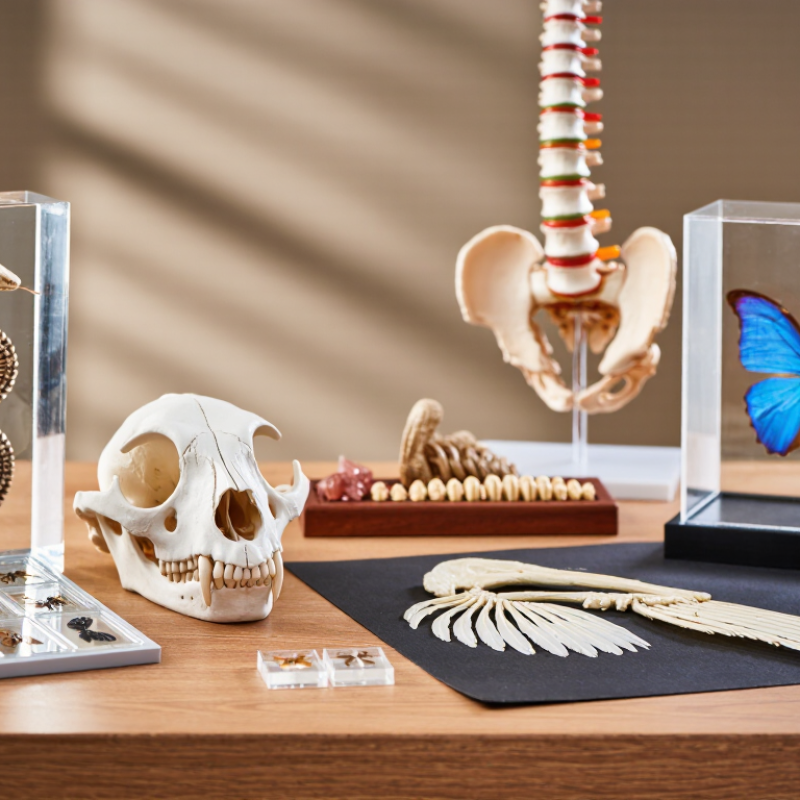
Anatomical specimens help buyers compare form, scale, and structure. A complete skeleton can show how joints connect, while an isolated skull makes differences in jaw shape easier to examine. Teeth reveal useful details too, including wear patterns and variation in size. Small features matter.

When assessing a specimen, check whether bones are present, securely mounted, and clearly identified. Look for cracks, repairs, loose teeth, and labels that state the species and preparation method. A clean surface does not guarantee accurate identification. Ask for clear photographs and supporting provenance records, especially when purchasing internationally.

A display-ready piece may not be the best teaching tool. Missing bones or unclear labels can give students the wrong impression, so note those limits in catalogs and classroom materials. I would also avoid treating a polished finish as proof of quality; sometimes it hides details worth studying. Choose specimens from legally documented sources, and check the import, export, and wildlife requirements that apply to both the source and destination.

Top 10 Animal Specimen Types: Representative Adult Tooth Counts

Permanent teeth in representative adult specimens

Tooth counts are typical reference values for adult specimens, not a measure of buyer demand. Individual variation occurs; horse dentition can vary with sex and the presence of wolf teeth.

Preserved Biological Materials: Wet Specimens, Insects, and Slides

For global buyers, preserved biological materials are not interchangeable display pieces. Wet specimens show anatomy in three dimensions; clear fluid, intact labels, and sealed lids matter. Insects reveal fine structures such as wing veins and antennae, but brittle legs can break during packing. Microscope slides make small features visible, provided the specimen is centered and the coverslip remains secure. Details matter.

Collection scale explains why documentation is essential. The Smithsonian’s National Museum of Natural History reports about 148 million specimens and artifacts, while London’s Natural History Museum describes a collection of roughly 80 million specimens. These institutional figures show the care required to manage diverse material, not a measure of commercial demand. Buyers should check each item’s scientific name, preparation method, collection date when available, and storage instructions. For wet material, request confirmation of the preservative and leak-resistant packaging. For insects, ask about mounting and humidity protection. For slides, confirm magnification suitability and whether labels match the specimen. A sharp image helps, but it cannot replace a legible label. I have seen descriptions that sound complete yet omit storage details; that gap deserves a follow-up before ordering. Use only properly documented material supplied through responsible, lawful channels.

How Global Buyers Assess Intended Use, Documentation, and Legal Sourcing

Global buyers should assess a specimen by its intended use, not appearance alone. A teaching collection may need clear anatomical features, while a display may prioritize condition and stable mounting. Common options include ethically sourced feathers, shells, insect mounts, and prepared skeletal materials. Each has different handling and documentation needs. A small label can make a large difference.

Before purchase, confirm the scientific name, source, preparation method, and intended-use restrictions. Ask for records showing lawful, traceable sourcing, such as supplier declarations or relevant permits when required. Requirements vary by species, origin, destination, and use, so verify current rules with the appropriate authorities. Do not assume that a common name proves a specimen is unrestricted. Names can be imprecise.

Inspect photographs closely. Look for visible damage, secure labels, and packaging suited to the material. For cross-border shipments, confirm that documents match the specimen description and declared purpose. Keep copies of correspondence and transaction records. Paperwork can be imperfect, and a missing detail may cause delays. If provenance is unclear, pause and request clarification before placing an order. A careful buyer protects both the collection and its educational value.

Article Source:

Scroll to Top