China Top Tiffin Lunch Box Manufacturers for Global Buyers

For global buyers, choosing a reliable Tiffin Lunch Box manufacturer involves more than comparing prices. The right supplier must combine safe materials, stable production, practical design, and transparent communication. A polished catalog is useful, but it cannot replace factory evidence.

Food-safety expert Dr. Lisa Ackerley states, “Food hygiene is everyone’s responsibility.” Her point applies directly to reusable lunch containers. Manufacturers should explain their stainless-steel grades, food-contact testing, sealing methods, and cleaning instructions. Buyers should request material reports, production samples, and recent quality records. Small details matter. A weak hinge can fail during daily commuting. An uneven weld may trap food residue. A loose silicone seal can leak curry inside a work bag.

China offers extensive manufacturing capacity, from small workshops to export-focused factories with automated forming and laser welding equipment. Yet capability differs widely. Some suppliers control every process internally. Others outsource key components without clear disclosure. That difference deserves attention. Certifications alone do not prove consistent quality.

This guide examines leading China Tiffin Lunch Box manufacturers for global buyers. It considers product design, customization, minimum order quantities, packaging, inspection support, and export experience. It also recognizes an uncomfortable reality: no supplier is perfect. Even experienced factories can face material delays, inspection failures, or communication gaps. Responsible sourcing requires questions, sample testing, and realistic expectations. The strongest partnerships develop through documented processes, honest feedback, and repeated performance—not attractive promises alone.
China Top Tiffin Lunch Box Manufacturers for Global Buyers

China’s Tiffin Lunch Box Manufacturing Industry at a Glance

China Top Tiffin Lunch Box Manufacturers for Global Buyers

China’s Tiffin Lunch Box Manufacturing Industry at a Glance

China’s tiffin lunch box industry benefits from a deep metalworking and plastics supply chain. The UNIDO International Yearbook of Industrial Statistics 2024 reports that China produced about 31.6% of global manufacturing value added in 2022. This scale supports stainless steel forming, silicone molding, surface finishing, and export packaging within one sourcing region. Manufacturing clusters commonly offer stainless steel, polypropylene, glass, and insulated designs. However, “factory” can sometimes mean a trading office. Buyers should verify production lines, tooling ownership, and monthly capacity.

Trade classification makes this sector difficult to measure precisely. Tiffin boxes may appear under different HS codes for household metalware, plastic tableware, or vacuum containers. ITC Trade Map and UN Comtrade data are useful starting points, but category overlap can distort comparisons. Product-level verification remains necessary. It is not perfect.

In practical audits, food-contact compliance deserves close attention. Request migration test reports, material declarations, and batch traceability records. Requirements may differ under EU Regulation 1935/2004, United States FDA rules, or other destination standards. Check the lid seal after repeated opening, not only when new. A box that looks polished may still leak after thermal cycling. Manufacturers with documented inspection points usually provide more reliable results, though paperwork alone cannot replace sampling. A sensible buyer should test odor, staining, hinge strength, and insulation performance before placing a large order.

China Top Tiffin Lunch Box Manufacturers for Global Buyers - China’s Tiffin Lunch Box Manufacturing Industry at a Glance

Data Dimension Industry Reference Data Relevance for Global Buyers
Typical Product Structure Single-, double-, and multi-tier containers; common configurations include removable compartments, snap-lock lids, silicone seals, and separate cutlery sections. Buyers can specify capacity, tier count, leak-resistance requirements, and packing configuration according to the target market.
Common Food-Contact Materials Food-contact stainless steel, polypropylene (PP), silicone sealing components, and glass are commonly used material categories. Material selection affects durability, weight, temperature resistance, recyclability, and regulatory documentation.
Frequently Specified Stainless Steel Austenitic stainless steels such as 304 are widely used for food-contact components; 316 may be selected where higher corrosion resistance is required. Request the exact steel grade, material composition, surface finish, and migration or corrosion-test documentation before approval.
Typical Manufacturing Processes Metal deep drawing or stamping, polishing, plastic injection molding, silicone compression molding, assembly, leak testing, and packaging. The selected process influences tooling cost, dimensional consistency, surface quality, production capacity, and customization options.
China Food-Contact Framework China’s GB 4806 series covers food-contact materials and articles, including general safety requirements, plastics, metal materials, and rubber or silicone-related materials. For China-market compliance, buyers should identify the applicable GB 4806 standard for every material and component in contact with food.
European Union Requirements EU Regulation (EC) No 1935/2004 establishes general requirements for food-contact materials; plastics are additionally covered by Regulation (EU) No 10/2011. EU importers should request a Declaration of Compliance, supporting test reports, and full material traceability.
United States Requirements Food-contact substances may fall under applicable U.S. FDA regulations in Title 21 of the Code of Federal Regulations, depending on the material and intended use. The intended food type, temperature, contact time, and material composition should be reviewed against the relevant FDA provisions.
Core Quality-Control Checks Dimensional inspection, lid-fit verification, leak testing, hinge or latch durability, surface inspection, odor assessment, and food-contact migration testing. A written inspection plan helps reduce leakage, deformation, sharp-edge, coating, and odor-related claims after shipment.
Common Customization Options Capacity, tier arrangement, compartment layout, colors, surface finish, lid design, packaging, labeling, and non-branded private-label artwork. Confirm whether customization requires new tooling, minimum order quantities, artwork approval, or additional compliance testing.
Packaging Considerations Typical export packaging includes individual protective packing, inner cartons, master cartons, and moisture- or impact-reduction measures where needed. Carton dimensions, stacking strength, drop protection, and shipping marks should be confirmed before mass production.
Buyer Documentation Checklist Material specifications, food-contact test reports, Declaration of Compliance where applicable, product drawings, inspection standards, carton details, and batch traceability records. Complete documentation supports customs clearance, retailer onboarding, product claims, and post-market traceability.
Reference sources: China National Health Commission, GB 4806 food-contact material standards; European Commission, Regulation (EC) No 1935/2004 and Regulation (EU) No 10/2011; U.S. Food and Drug Administration, Title 21 CFR food-contact regulations. Product specifications and compliance requirements should be verified for the exact material, construction, intended food type, and destination market.

How to Evaluate Top Chinese Tiffin Lunch Box Manufacturers

How to Evaluate Top Chinese Tiffin Lunch Box Manufacturers

Choosing a Chinese tiffin lunch box manufacturer requires more than comparing catalog prices. Examine factory experience, production capacity, and food-contact material controls. Ask for stainless steel grades, plastic specifications, coating details, and recent test reports. Reliable manufacturers should explain their quality process clearly, not hide behind general claims. Request samples from current production, then inspect lid fit, welds, hinges, and surface finishing. Fill each compartment with warm food and shake the box gently. Small leaks often reveal weak seals.

Tips: Visit the factory online or in person when possible. Check whether raw materials are labeled and traceable. Compare the approved sample with mass-production units. Confirm minimum order quantities, tooling charges, packaging options, and delivery schedules in writing. Ask how defects are recorded and corrected. A responsive quality team matters more than polished sales language.

Professional buyers should also evaluate communication and consistency. Can the manufacturer provide drawings, inspection records, and practical answers within a reasonable time? Review independent audit evidence carefully, because one certificate does not prove daily performance. Conduct pre-shipment inspections with measurable standards for scratches, dents, odor, sealing, and dimensions. I have found that some suppliers offer attractive samples but struggle with repeat orders. That gap deserves attention. No manufacturer is perfect, and a buyer may overlook a minor weakness during a busy sourcing project. Clear specifications, trial orders, and documented corrective actions reduce that risk.

Leading Chinese Manufacturers and Their Product Specialties

China Top Tiffin Lunch Box Manufacturers for Global Buyers

Chinese manufacturers now serve several distinct lunch box segments. Grand View Research estimated the global lunch box market at about USD 1.6 billion in 2023, with steady growth expected through 2030. This demand supports factories producing stainless steel tiffins, lightweight plastic containers, and insulated meal boxes.

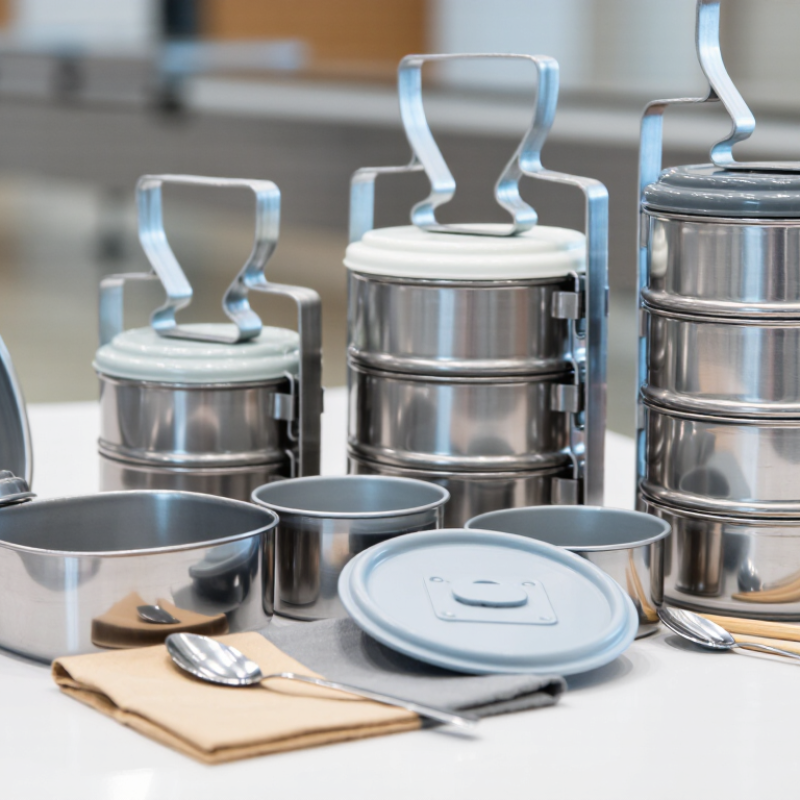
Stainless steel specialists focus on 304-grade interiors, polished seams, and stacked compartments. Their products suit office meals, school food, and repeated daily use. Plastic-focused manufacturers often provide microwave-safe polypropylene bodies, leak-resistant lids, and colorful injection-molded parts. Silicone seal development is important here. A weak gasket can ruin an otherwise good container.

Not every factory offers the same engineering depth. Some suppliers excel at high-volume OEM production, while others handle smaller custom orders more carefully. The China Food and Drug Administration’s food-contact standards, alongside EU and US requirements, should guide material verification. Buyers should request migration test reports, factory audit records, and sample checks before ordering. Reports from Intertek and SGS regularly emphasize traceability, material testing, and production control in food-contact goods.

Electric heated lunch box manufacturers add wiring, temperature control, and removable heating components. These products need stricter inspection than ordinary containers. Buyers should examine plug compatibility, insulation, water resistance, and thermal cut-off performance. Market reports offer useful direction, but they rarely reveal factory-level weaknesses. That gap matters. A perfect catalog photo cannot confirm hinge durability after six months of use.

Materials, Designs, Certifications, and Customization Options

China’s tiffin lunch box manufacturers offer practical choices for global buyers. Experienced factories commonly use 304 stainless steel, food-grade polypropylene, silicone seals, and durable coatings. Material selection should match the meal, temperature, and target market. Stainless steel resists odors and staining. Polypropylene reduces weight. Silicone helps control leakage, but seals require careful testing.

Designs range from two-tier containers to compact three-compartment sets. Buyers can request stackable layers, locking clips, carrying handles, or removable dividers. Some models include steam vents for reheating. Others focus on office meals and travel storage. Small details matter. A loose hinge can weaken the entire product. Smooth inner corners also make cleaning easier and reduce trapped food.

Compliance documents should be checked before mass production. Depending on the destination, buyers may request food-contact test reports, migration testing, LFGB or EU framework compliance, FDA-related documentation, and factory quality records. Requirements differ by market. Do not rely on a certificate image alone. Confirm the issuing laboratory, test date, material scope, and batch relevance. Customization may include colors, logo printing, embossed lids, mold changes, inserts, and retail packaging. Minimum order quantities can increase with deeper customization. A sample may look excellent yet reveal weak clips after repeated use. That is a useful warning, not a failure to hide. Reliable sourcing combines factory audits, pre-production samples, production inspections, and honest communication about limitations.

Sourcing, Quality Control, and Global Shipping Considerations

Choosing among China’s leading tiffin lunch box manufacturers requires more than comparing unit prices. I usually begin with factory records, production capacity, material specifications, and export experience. Ask for recent samples, not only catalog photographs. A useful sample check covers lid fit, welds, hinges, silicone seals, and odor after washing. Small details matter. A supplier should provide traceable material information and relevant food-contact test reports for target markets. “Top” is not a quality certificate. That wording deserves verification.

Quality control should continue after approval. Define acceptable limits for scratches, dents, leakage, color variation, and packing damage. Inspect incoming steel, monitor assembly, and perform random carton checks before shipment. For insulated or multi-tier models, test temperature performance under repeatable conditions. Keep inspection photos, batch numbers, and signed records. I have seen attractive samples hide inconsistent hinge tension in mass production. That failure is easy to miss and expensive to correct. A pre-shipment inspection helps, but it cannot replace process control.

Global shipping planning starts with accurate carton data. Confirm dimensions, gross weight, pallet requirements, port options, and the agreed Incoterm. Use moisture-resistant cartons when containers face long humid routes. Check labels, manuals, customs documents, and destination packaging rules before booking freight. Sea shipping may reduce cost, while air freight suits urgent replenishment. Transit delays still happen. Build practical buffer time. One overlooked issue is spare-part planning; a few extra seals or lids can protect customer service when replacements are slow.

Scroll to Top