7 Tips for Choosing Terracotta Floor Tiles
Terracotta Floor Tiles bring warmth and natural variation to kitchens, entryways, and living spaces. Their earthy reds, soft oranges, and uneven surfaces can make a room feel grounded. But color is only part of the decision. Clay composition, tile thickness, finish, and firing can all affect appearance and performance. Even tiles from one batch may vary. That variation is part of their appeal, though it can surprise buyers expecting a perfectly uniform floor.
Choosing well starts with the room itself. A busy hallway faces different wear and cleaning demands than a quiet bedroom. Ask suppliers for product specifications, care instructions, and guidance on sealing; recommendations can differ between tiles. A sample helps, but view it in your own light and beside your cabinets or walls. Small details matter. Grout color can change the overall look, while the tile’s surface may feel different underfoot than it appears in a showroom. A common planning mistake is choosing by photographs alone. I’d pause over that, especially when color consistency matters to you. The following seven tips offer a practical way to compare options, check suitability, and plan installation. They cannot remove every uncertainty, and natural materials rarely behave like printed samples. Still, careful questions before ordering can help you find Terracotta Floor Tiles that fit both your home and your expectations.
Understanding Terracotta Tile Types and Their Natural Characteristics
Terracotta tiles are made from fired clay, but they do not all look or perform alike. Handmade tiles often show soft edges, small size differences, and shifting shades of red, ochre, or brown. Machine-made tiles tend to be more uniform, which can make layout easier. Neither type is automatically better. Expect variation.
Surface finish matters too. Unglazed terracotta reveals the clay’s natural texture and usually needs sealing because it can absorb spills. Glazed tiles have a protective surface and may be easier to wipe clean, though glaze can change the earthy look. Check the manufacturer’s care guidance and ask whether sealing is recommended. A small water test on an unsealed sample can reveal how quickly it absorbs moisture, but it is not a substitute for product instructions.
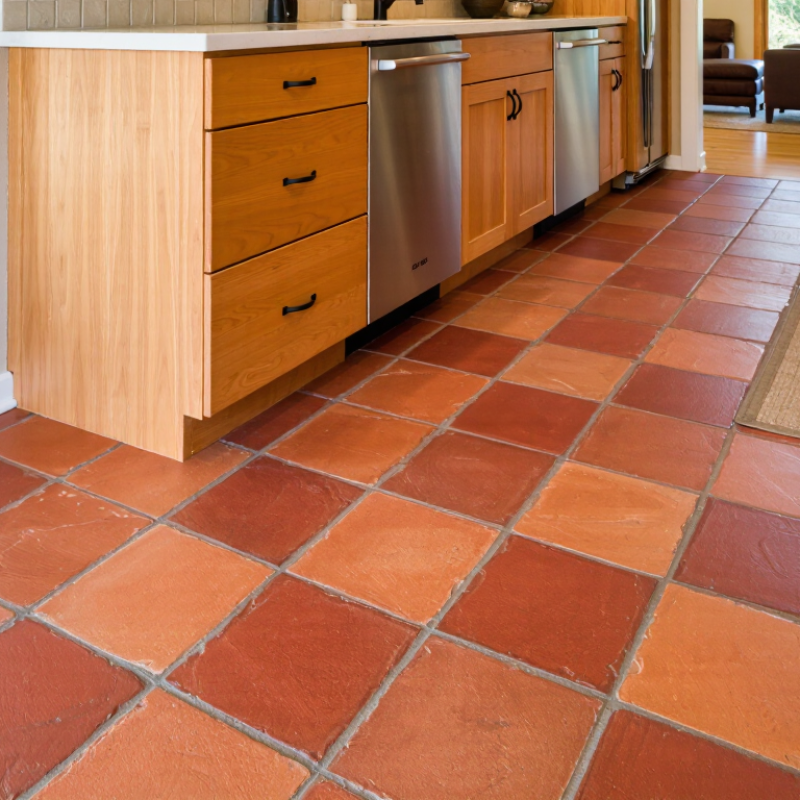
Natural color variation is part of terracotta’s appeal, yet it can surprise people once a floor covers a large room. Lay several sample tiles together in daylight before choosing a shade. Look closely at corners and the tile backs, too; uneven thickness may affect installation and grout lines. Rustic character has a cost. I would not choose a highly irregular tile for every space without considering cleaning, furniture movement, and the installer’s skill.
Assessing Room Conditions, Moisture, and Foot Traffic
Tip: Check the room before choosing a finish. In a sunny kitchen, inspect samples near the window; terracotta’s warm color can look different under direct light. Kitchens and entryways also collect grit, which may wear softer finishes faster. Ask the supplier for the tile’s water-absorption results, tested under ASTM C373. Terracotta varies, so do not assume every tile has the same porosity. A sample is useful, but it cannot replace test data.
Tip: Treat moisture as a design condition, not an afterthought. In bathrooms or laundry rooms, confirm that the tile, grout, and installation system suit repeated wetting. The Tile Council of North America references ANSI A326.3, which sets a minimum wet dynamic coefficient of friction of 0.42 for many level interior floors expected to be walked on when wet. That figure is not a guarantee against slips. Check test results for the actual tile and intended use. Wet shoes change everything.
Tip: Match the surface to foot traffic. A busy hallway may need a more durable finish and regular sweeping to limit grit scratches. Ask whether sealing is recommended, and how often it may need renewal. Sealer can change appearance. Test it on a spare tile first; I would not skip that step, even when the sample looks convincing.
Selecting Tile Size, Shape, Color, and Surface Finish
Large terracotta tiles can make a small room feel calmer, with fewer grout lines crossing the floor. In a narrow hallway, though, oversized pieces may create awkward cuts at the walls. Smaller squares suit compact spaces and traditional layouts, but they need more grout and careful cleaning. Measure the room before choosing. A taped outline helps. Shape also affects the mood: rectangles can guide the eye along a kitchen, while hexagons add a busier pattern. Intricate shapes look appealing on a sample board, yet cuts around doorways can complicate installation.
Color shifts with clay, firing, and light, so one tile may look warmer than its neighbor. Check several samples near a window and under evening lighting. Light matters. Terracotta often deepens after sealing, though the result depends on the tile and sealer; ask for a finished sample before committing. Surface finish matters too. A smoother finish is easier to wipe, while a textured one may offer more grip but hold dirt in its grooves. Wet-area suitability depends on the specific tile and installation, so confirm its performance with a qualified installer. It is easy to fixate on the perfect shade and overlook upkeep; that trade-off deserves a little thought.
Checking Durability, Sealing Needs, and Maintenance Requirements
Terracotta can last for decades, but durability depends on the clay, firing, tile thickness, and installation. Ask whether the tile is suitable for your room and expected foot traffic. A floor near an exterior door faces grit, wet shoes, and frequent cleaning; a quiet bedroom has different demands. Check the supplier’s technical information, and request a sample if possible. Look for chips, uneven edges, and color variation in daylight. Variation is part of terracotta’s appeal, though it can make replacement difficult later.
Sealing deserves careful attention. Many terracotta tiles are porous, so spills can soak in and leave marks if the surface is unsealed or the sealer has worn away. Confirm whether sealing is needed before and after installation, and use a product intended for the tile and finish. Follow its instructions rather than guessing. Test it on a spare tile. Small detail, big difference. Ask how often resealing may be required under your conditions; kitchens and entryways usually need closer monitoring than lightly used rooms. For everyday care, sweep grit before mopping with a well-wrung cloth and a compatible cleaner. Avoid harsh or acidic cleaners unless the tile-care guidance specifically permits them. One imperfect reality: maintenance takes more attention than many people expect, and even careful sealing cannot prevent every stain. I would plan for that before choosing the warm, rustic look.
Comparing Suppliers, Quality, and Installation Considerations
Choosing a supplier means looking beyond attractive photos. Ask where the clay is sourced, how tiles are fired, and whether batches are graded by shade and thickness. Request several pieces from the same production run; one sample can hide noticeable variation. Check written specifications for dimensions, water absorption, finish, and recommended sealing. Ask about replacement stock, too. Terracotta naturally varies in color, but vague answers about batch consistency deserve a second look.
Quality shows up at the edges and on the back. Compare tile thickness, inspect for cracks, and lay a few pieces together under daylight. Slight color variation can add warmth. Warped edges or inconsistent sizing may complicate a tight layout. If possible, ask for a small dry-lay before ordering the full quantity. It takes time. It may prevent an expensive mismatch.
Installation depends on the tile and the room. Confirm that the subfloor is stable, level, and suitable for the chosen adhesive. Kitchens and entryways also need careful moisture planning. Ask the installer to follow the tile maker's guidance on sealing before and after grouting. Porous clay can stain if grout is left too long, so test a small area. Discuss joint width, movement joints, and finished floor height near doors. It is tempting to assume a rustic surface will disguise every uneven cut; it may not. A mock-up can reveal problems before the tiles are set.